

by Irshad Ahmad Mughal & Dr. Qurat-Ul-Ain Rana
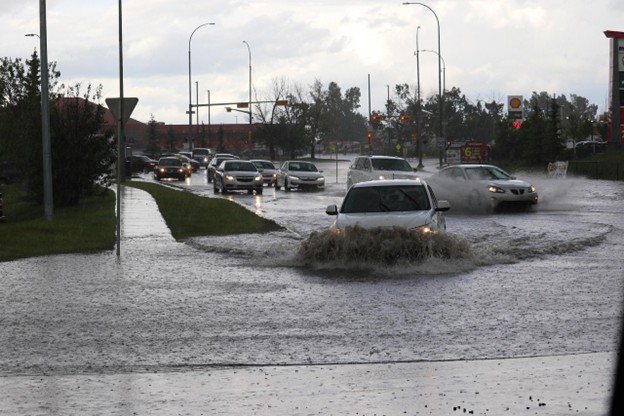
The streets of Lahore, Rawalpindi, and Islamabad have turned into rivers again – not by nature’s whim, but by our own foolish defiance. As climate change brings heavier rains and faster glacial melts, we continue to fight against water’s simple truth: it always finds its way. For years, we’ve narrowed rivers with illegal constructions, paved over floodplains for housing societies, and forced storm water into clogged drains. Now the water is fighting back, and we stand shocked as our own concrete creations become traps rather than shelters.
This is the paradox of water – soft enough to nurture civilizations, yet powerful enough to erase them when disrespected. Ancient wisdom understood this balance. Lao Tzu observed centuries ago: “Nothing in the world is as soft and yielding as water, yet for dissolving the hard and inflexible, nothing can surpass it.” Today, his words echo through Punjab’s flooded streets as water tears through barriers we arrogantly believed would hold.
The crisis reveals our double failure: we’ve ignored both climate science and basic hydrology. Warmer air brings more intense rainfall, while our cities, layered with concrete, have lost their ability to absorb it. Natural drainage paths that existed for millennia have been blocked by buildings and roads. When we channel raging water into narrow, garbage-filled drains meant for sewage, the results are as predictable as they are devastating.
Yet even now, the solution remains within reach – not in conquering water, but in understanding it. We must reclaim floodplains from illegal constructions, design cities that absorb rainfall rather than repel it, and restore natural drainage systems. The Dutch, who live below sea level, learned long ago to work with water rather than against it. Their approach – making space for rivers rather than constricting them – offers lessons we desperately need.
The choice before us is stark. We can continue our losing battle against nature, pouring more concrete in vain attempts to control what cannot be controlled. Or we can learn water’s wisdom – its flexibility, its persistence, its inevitable victory. To survive the coming storms, we must become more like water ourselves: adapting where necessary, persistent where vital. Those who fail to learn this lesson won’t just face flooded streets – they’ll become relics of a stubborn past that refused to change.
As the floodwaters eventually recede, they leave behind more than physical damage. They reveal a truth we’ve long avoided: in our battle against nature, nature always wins. The question isn’t whether water will flow – it’s whether we’ll be wise enough to flow with it.
We stand knee-deep in floodwaters for the third straight year, yet still refuse to understand the simple truth written in every rushing current: our thinking is the problem. The solution to this recurring calamity doesn’t lie in bigger dams or higher walls, but in confronting the foolishness that makes us repeat the same mistakes while expecting different results.
Our collective folly manifests in concrete hubris – building shopping malls where rivers need to breathe, constructing housing societies on ancient flood channels, then acting surprised when water reclaims its territory. Like stubborn children defying gravity, we keep trying to bend nature to our will rather than adapting to its laws. The fury of these floods isn’t nature’s wrath, but nature’s lesson plan – one we keep failing because we refuse to study.
The bitter irony? Water itself shows us the way forward. It adapts instantly – flowing around obstacles, rising when compressed, carving new paths when old ones are blocked. Meanwhile, we keep doubling down on rigidity, pouring more concrete where flexibility is needed, enforcing outdated zoning laws while climate realities change around us. Our greatest failure isn’t engineering miscalculations, but learning disabilities – the inability to recognize that yesterday’s solutions cause today’s disasters.
Real change begins when we stop blaming clouds and start confronting the mirror. When we value natural drainage over political connections, when we prioritize floodplains over profit margins, when we finally understand that water will always be more persistent than human pride. The Dutch didn’t conquer water – they learned its language. Bangladesh adapted its agriculture to floods rather than pretending they wouldn’t come.
The floods will keep teaching this lesson until we learn it: Nature doesn’t negotiate. We can either flow with its logic or drown in our stubbornness. Every submerged car, every destroyed home, every displaced family screams this truth. The question is – when will we finally start listening?
The solution was never in the water. It was always in our minds. And until we change how we think, we’ll keep rebuilding in the same foolish places, surprised each time the water returns to remind us who was here first.
About the authors:

Irshad Ahmad Mughal

Dr. Qurat-Ul-Ain Rana
Irshad Ahmad Mughal and Dr. Qurat-ul-Ain Rana form a formidable intellectual partnership in contemporary Pakistani scholarship. Prof. Mughal, renowned for his Urdu translations of Paulo Freire’s revolutionary works and decades of teaching political philosophy at Punjab University, joins forces with Dr. Rana, an accomplished sociologist and social commentator whose razor-sharp analyses regularly grace Pakistan’s premier journals. Together, their collaborative writings for Pressenza weave rigorous academic insight with urgent social critique—bridging Western critical theory with South Asian realities to illuminate pathways for transformative change.”