

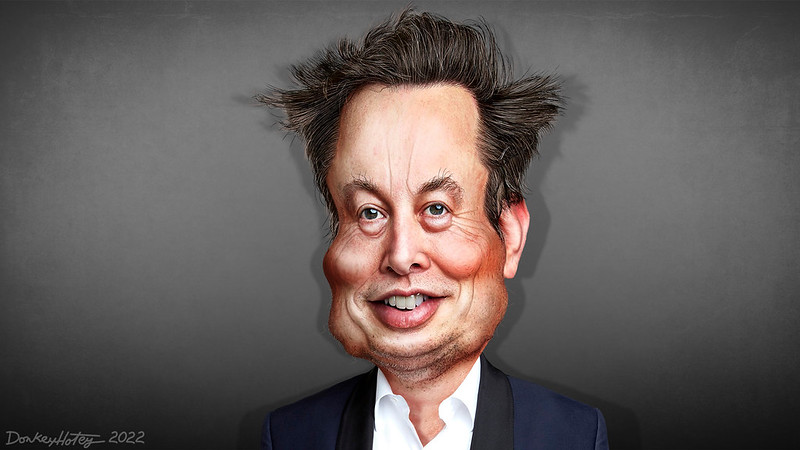
Elon Musk’s recent announcement to create a new political party in the United States has sent shockwaves through the political establishment. In a country dominated by a deeply entrenched two-party system, many political analysts quickly dismissed the idea as unrealistic, labeling it as “crazy” with little chance of success. But Musk’s history suggests he is not one to follow conventional wisdom.
Unlike Donald Trump, who positions himself as a conservative figure seeking to “Make America Great Again” by restoring a glorified past, Musk’s projects are consistently future-oriented. From electric vehicles with Tesla, global internet coverage via Starlink, and interplanetary exploration through SpaceX, his projects are large-scale, borderless, and transformative, designed to redefine what’s possible for humanity.
Musk represents a new generation of leadership that sees the world as interconnected and increasingly post-national. His deep investments in China, vocal support for H1B visas to bring skilled immigrants to the U.S., and push for renewable energy demonstrate a globalist, technologist mindset rather than the nationalist stance typical of many current political figures.
Still, Musk faces significant political hurdles. His relationship with the Democratic Party has been cool at best. The Biden administration repeatedly downplayed Musk’s contributions to the development of electric vehicles, choosing instead to highlight competitors like Ford and General Motors. Though Musk played a key advisory role during Trump’s second term—as de facto head of the newly formed Department of Government Efficiency—the alliance quickly fell apart. Musk publicly denounced Trump’s tax legislation as “insane,” and the two figures drifted into an open feud. These experiences have likely fueled Musk’s desire to disrupt the political status quo.
Musk’s ambition seems to extend beyond merely influencing policy; he wants to reshape the very framework of American politics. His Mars colonization project, for example, is not just a private commercial venture—it is a societal mission that would require public investment and national commitment, much like the Apollo program of the 1960s. To bring such a vision to life, Musk may be seeking the political infrastructure to secure government partnership on his terms.
If successful, Musk’s political movement could upend the longstanding Republican-Democrat binary, which has lost much of its ideological clarity and is increasingly seen as a competition between personalities rather than ideas. Musk could introduce a new axis of division: a contest between those who champion the future and those who cling to the past. In this emerging narrative, Trump symbolizes the politics of nostalgia while Musk positions himself as the voice of innovation and radical progress.
The political landscape in the U.S. is so fragmented and volatile that it’s difficult to predict how things will unfold. Still, Musk brings to the table something few can match: vast personal wealth, unrivaled media influence, proven leadership in multiple industries, and very little to lose in what could become a historic battle for the direction of the country.
Whether Musk’s political party gains traction or fizzles out, one thing is clear—he has already succeeded in shaking up the conversation.



