

by Irshad Ahmad Mughal and Dr. Qurat ul Ain Rana
A single scroll through my social media feed reveals Pakistan’s heartbreaking paradox. On one side, vibrant scenes of life unfold—children playing cricket in dusty village squares, colorful wedding processions winding through streets alive with music, communities gathering for festivals that pulse with joy despite daily struggles. On the other side, an unrelenting barrage of violence: mob justice meted out in public squares, ethnic clashes flaring in Balochistan, and the haunting case of an actress lying dead in her Karachi flat for six months before discovery. This is Pakistan today—a land where resilience and savagery exist side by side, where the human capacity for joy stubbornly persists even as brutality becomes routine.
The contrast is most jarring in our villages, once idyllic spaces where children roamed freely and neighbors shared unguarded laughter. Today, those same villages have become landscapes of fear—parents keep children indoors, distrust poisons old bonds, and the joyful chaos of street cricket gives way to whispers of kidnappings and abuse. Yet even here, life defiantly continues. Farmers still gather after harvest to celebrate with drumbeats, boys still sneak out to play matches under fading sunlight, and elders still pass down traditions that have survived generations. This duality defines us: we are a people who plant flowers even as the ground shakes beneath our feet.
Our cities mirror this contradiction. In Karachi’s labyrinthine alleys, one street echoes with wedding revelry while the next trembles with political violence. University campuses buzz with youthful idealism, yet female students from conservative backgrounds navigate a minefield of judgment and danger. The generational divide widens daily—elders cling to fading traditions while youth chafe against restrictions, with smartphones amplifying both connection and conflict. Social media, which could bridge these gaps, instead amplifies our fractures, flooding feeds with both our brightest creativity and darkest impulses.
The roots of our unraveling run deep. Ethnic militancies in Balochistan turn civilians into pawns, with Punjabi laborers paying the price for political grievances. Economic disparity fuels resentment as the rich retreat into gated communities while the poor scramble for basic dignity. Most damning is our collective failure to cultivate tolerance—no influential movement teaches Pakistanis to embrace diversity of thought, faith, or identity. Suspicion festers where understanding should grow, and violence becomes the default language of discontent.
Yet for all this darkness, light persists. In Lahore’s old quarters, artisans still craft intricate pottery as their ancestors did centuries ago. In Gilgit’s mountain villages, communities share harvests across religious lines. Even in Karachi’s toughest neighborhoods, strangers rally to help flood victims. This enduring humanity is Pakistan’s saving grace—but it cannot survive unchecked decay.
The tragedy isn’t merely the violence; it’s our resigned acceptance of it. No national movement rises to bridge divides, no leadership effectively tackles inequality or intolerance. We oscillate between celebration and mourning, between community and chaos, never addressing the sickness beneath the surface.
Pakistan stands at a crossroads. Will we become a cautionary tale—a civilization whose vibrant culture was consumed by its own contradictions? Or will we rediscover the wisdom that once helped diverse communities thrive together? The answer lies not in grand gestures, but in daily choices: the parent who teaches tolerance, the neighbor who rejects rumors, the citizen who demands accountability. Our beauty has always outshone our brutality. The question is whether we’ll fight to keep it that way.
About the authors:

Irshad Ahmad Mughal
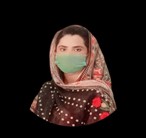
Dr. Qurat-Ul-Ain Rana
Irshad Ahmad Mughal and Dr. Qurat-ul-Ain Rana form a formidable intellectual partnership in contemporary Pakistani scholarship. Prof. Mughal, renowned for his Urdu translations of Paulo Freire’s revolutionary works and decades of teaching political philosophy at Punjab University, joins forces with Dr. Rana, an accomplished sociologist and social commentator whose razor-sharp analyses regularly grace Pakistan’s premier journals. Together, their collaborative writings for Pressenza weave rigorous academic insight with urgent social critique—bridging Western critical theory with South Asian realities to illuminate pathways for transformative change.”