

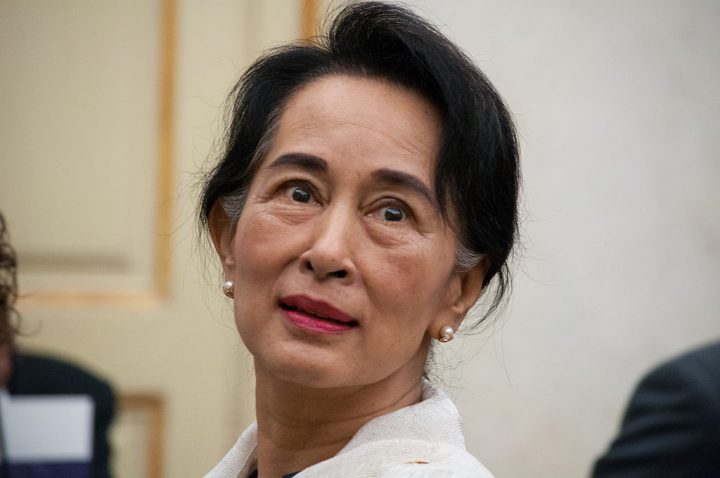
Aung San Suu Kyi, the Burmese leader and Nobel Peace Prize laureate, has something the generals have never had: she is legitimized by the mandate the people have given her to govern the country. The generals, on the other hand, have never been elected and, in the eyes of the people, have no recognized authority.
In her first political speech on August 26, 1988, a 43-year-old woman with no political experience—who until just a few weeks earlier had been living in Cambridge with her husband and two children—was thrust into the fray by the leaders of the uprising. They asked her, by virtue of her lineage as the daughter of Burma’s national independence hero, to lead the revolution. had the audacity to define the popular uprising underway since October 8 as the “second struggle for independence,” and from that moment on entered politics. Her political message since then has been to diligently challenge every unjust authority and order. She encouraged people to engage in nonviolent political resistance.
Her political goal has always been clear and openly stated: to overthrow the dictatorial regime and establish a democratic order to ensure equal rights and dignity in a confederated state. It is precisely thanks to the general uprising of August 1988 that awareness of democratic ideals among the Burmese has since increased significantly. For this reason, the generals placed her under house arrest as early as July 20, 1989. More than thirty-five years have passed since then, and Aung San Suu Kyi has spent twenty of those years under house arrest, if not actually in prison, as has been the case for the last five.
But today, the news we’ve all been waiting for has finally arrived: she was released last night and taken to “a house,” surely under house arrest. We hope to hear from her soon.