

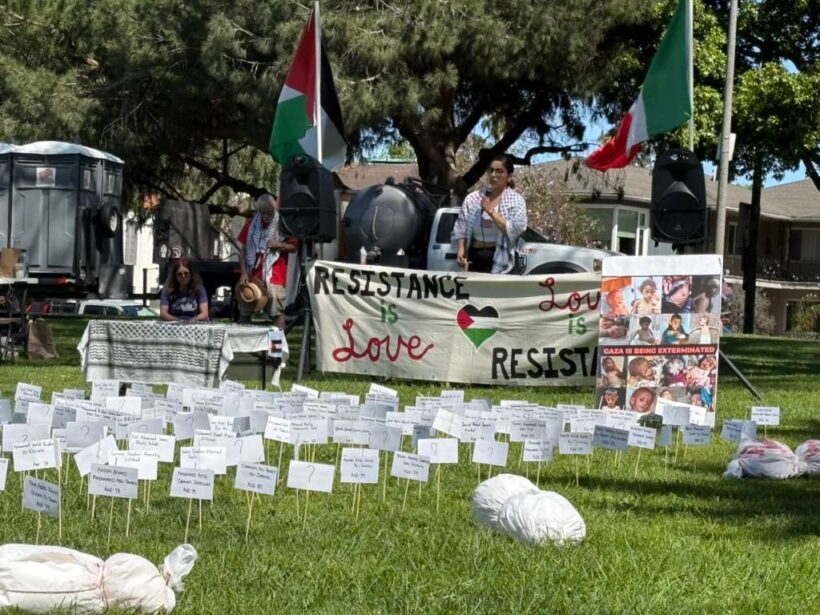
A week after the third major protest of the No Kings movement, activists are busy like bees. Events are numerous across the country: the event at Bixby Park in Long Beach commemorates the thousands of deaths in Gaza and the victims of ICE. Someone with beautiful handwriting wrote numerous names and a few question marks on blank cards, which they then stuck into the ground. Silva, standing behind a small table covered with a keffiyeh, calls for a minute of silence for the victims of the ongoing genocide and for the harassed and deported immigrant workers.
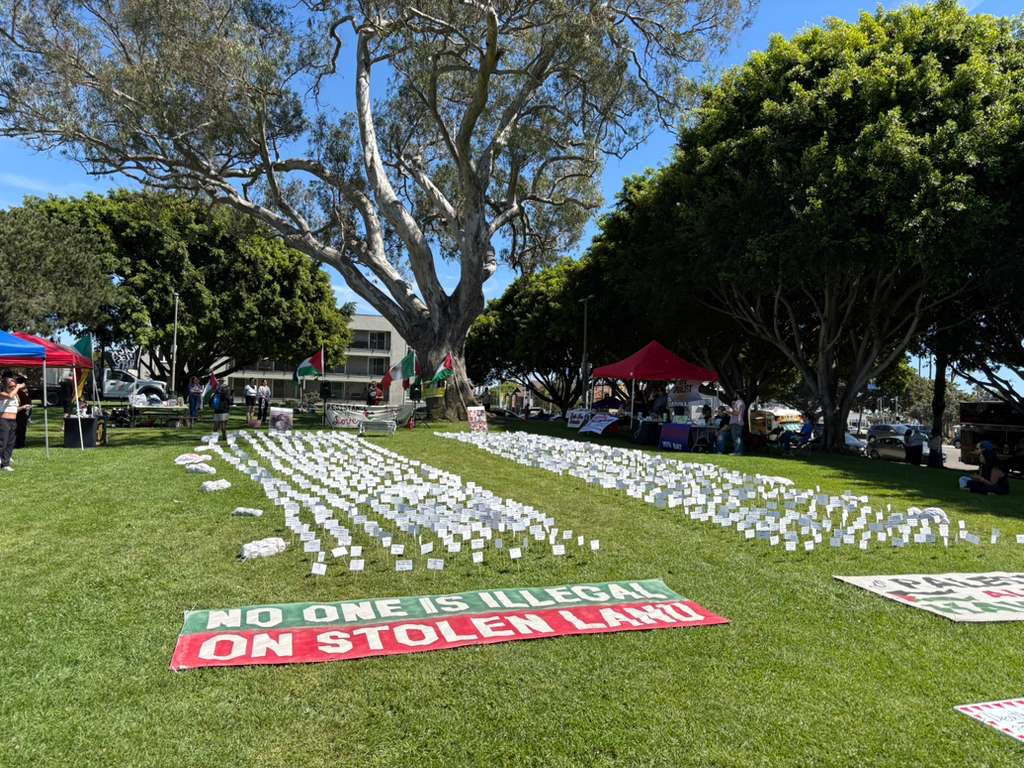
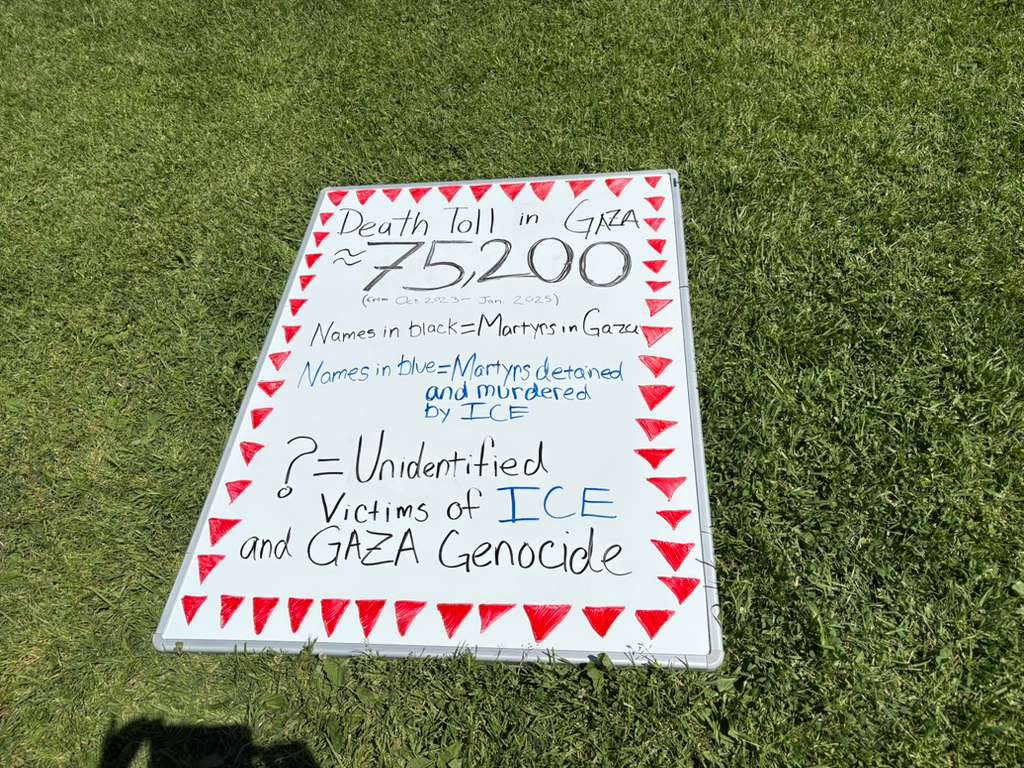
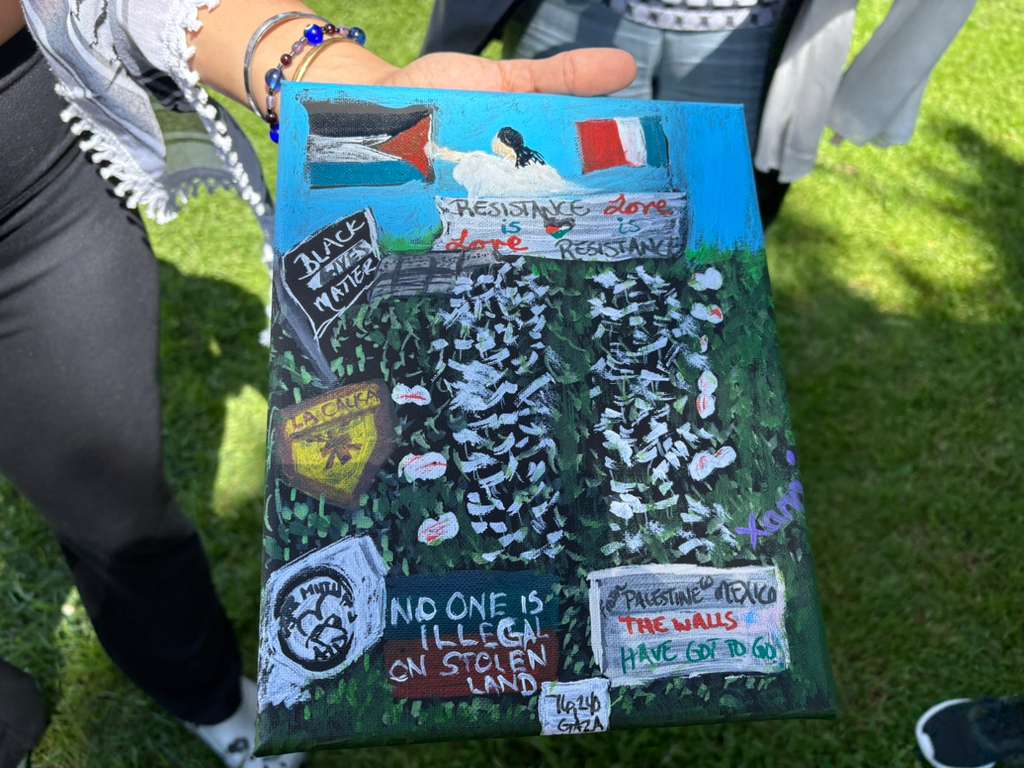
The long-planned initiative aims to highlight the connection between the two phenomena, both the product of imperialist capitalism, which, to maintain its hold on power, crushes and kills anyone who doesn’t fit its mold. For the event’s creators, the message they want to send to the public is clear: “You don’t fight the system that oppresses us by only looking at it from the side that seems closest to you.” It’s a common mistake, in fact, to take action only when you feel directly involved, when injustice affects you personally and danger is imminent.
The commemoration at Bixby Park is sober and attracts a few passersby; someone will write about it in the local newspaper. It doesn’t even compare to the furor sparked by NO Kings Day III. Yet, although it was a success in terms of participation, the revolutionary Saturday of celebration is over and little or nothing has changed: migrant deportations continue, taxes are decreasing for the wealthy, and imperialist aggression seems unstoppable.
According to Ash-Lee Woodard Henderson, moderator of the “NO Kings Mass Call: What’s Next” panel, which explores why it’s worth moving forward, the first thing we need is a structure that allows diverse groups to participate and thus collectively obtain the nine-zero number necessary to shake those in power. The goal is therefore an open structure where, under the banner of NO Kings, every libertarian and anti-fascist soul can identify; everyone is welcome, and there’s no need to specify further.
Faced with this mixture, dipped in a thousand sauces, however, many dissenting voices have been raised, and I too have had doubts.
One of the first things that catches the eye is the lack of a demand for a free Palestine. In recent years, this has been the common denominator under which every form of oppression perpetrated by the capitalist system has been defined; today, in the massive NO Kings movement, it seems to have been replaced by a categorical rejection of the figure of the President-King, who, despite being mocked in every way, is paradoxically omnipresent.
But it’s not just Palestine that’s missing from the roll call, but virtually every country under attack by US imperialism, from Cuba to Venezuela. And here’s where we need to understand each other. Associations supporting a free Palestine, those calling for an end to the embargo on Cuba and legal and military respect for Venezuela, also gathered under the No Kings movement’s large tent on Saturday, March 28. But this only happened in the big cities; in smaller towns, they remained absent. And above all, their demands, in official videos and media, were decidedly overshadowed.
The other concern is about the danger of a relapse into the status quo. This possibility is far from being far-fetched, given that the Democratic Party, while not listed among the organizers, provided media and logistical support for the event. This hasn’t escaped the attention of many, who see this as nothing more than riding the wave to watch it dissipate. And above all, the question looms: if Trump’s authoritarian government were to fall, who would replace it? We would have banished the arrogant, self-appointed king to return to a system that existed long before Trump and, in fact, is the one that allowed it to emerge. Where are the signs of a systemic change visible? We’re all under the big tent today because we’re united against a tyrant and we want to save democracy. But what will happen tomorrow, when the demands of many begin to diverge? If the tensions holding up the big tent of imperialist capitalism aren’t changed, we’ll fall back into a hypocritical façade of democracy. My question, then, is: what kind of democracy is the No Kings movement fighting for? Pushing major foreign policy issues to the sidelines to focus on the problems facing the American people at home could be dangerous and lead to a Pyrrhic victory, or perhaps not even that.
Activists like those in Bixby Park, who work day after day, despite their small numbers, seem to have a longer view and understand that the responsibility of American citizens includes taking charge of a 180-degree change in the imperialist system, which, just as it impoverishes the average American, equally strangles the Palestinian, the Venezuelan, the Lebanese, the Filipino, the Iranian, and whatever else stifles its greed. With this spirit, they carry out what they believe to be their moral duty to tell the truth, whether the public applauds them or ignores them. They have accepted a long job that requires patience, care, and love, and where one must never become either discouraged or exalted.



