

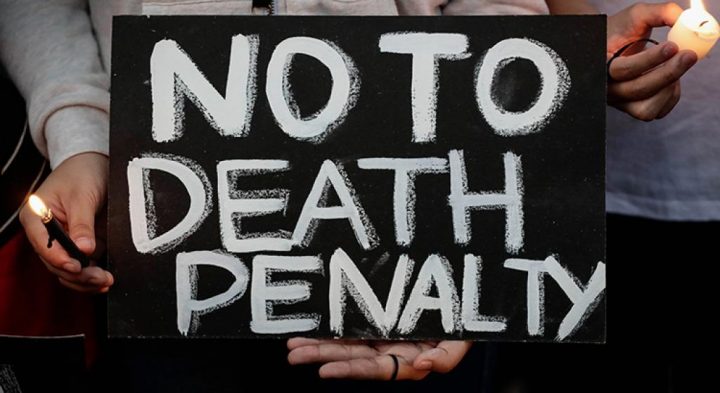
Amnesty International has called on Knesset members to vote against a series of bills containing controversial amendments that would allow Israeli courts to expand the use of the death penalty through arbitrary application against Palestinians.
The call was made on the eve of a vote in the Knesset’s National Security Committee on one of the key bills.
Under the proposals, the death penalty would be applied to those convicted of intentional homicide with the intent to harm an Israeli citizen or resident, or to those convicted by military courts of homicide in circumstances defined by Israeli law as “acts of terrorism,” a provision that would primarily affect Palestinian defendants. In some cases, the death penalty would be mandatory, with no right to appeal.
One of the bills, approved in its first reading by the Knesset in November 2025, seeks to amend both the military laws applicable in the occupied West Bank, including East Jerusalem, as well as the laws applicable in Israel and in the illegally annexed East Jerusalem itself, to increase the number of crimes punishable by death and eliminate important due process guarantees.
“The Knesset is going against the global trend toward abolition of the death penalty and seeking to create new ways to impose capital sentences. The Knesset should immediately reject these amendments rather than rush through discriminatory measures that would further the institutionalized system of apartheid against Palestinians under Israeli control,” said Erika Guevara Rosas, Senior Director of Campaigns and Research at Amnesty International.
“Through these bills, Israel is clearly giving itself carte blanche to impose death sentences on Palestinians. Any death sentence issued on the basis of the amendments under consideration by the Knesset would be a violation of the right to life and, if imposed by a military court, could even constitute a war crime,” Guevara Rosas emphasized.
In addition to increasing the number of crimes punishable by death, the bills provide for special procedures designed to eliminate international human rights law guarantees of due process:
For example, restricting access to information about executions for vague “security” reasons; authorizing special military courts to pass sentences on crimes related to the October 7, 2023, attacks, deviating from standard procedures and legal principles of evidence and thus further restricting the rights of those at risk of execution; and finally, allowing executions to take place in the absence of religious representatives or the judiciary.
Israel has not carried out any executions for over 60 years. The proposed measures, if approved, would also represent a 20-year retreat from Israel’s commitments made since 2007 regarding the UN General Assembly resolutions calling for a moratorium on executions with a view to abolishing the death penalty.
The proposed amendments to military laws would allow military judges in the occupied West Bank, excluding occupied East Jerusalem, to impose the mandatory death penalty with a simple majority of three judges, even in cases where the prosecution does not seek the death penalty. Such sentences would not be subject to commutation or pardon and would be carried out within 90 days, in serious violation of the limitations and guarantees under international law. Military courts operating in the occupied West Bank have jurisdiction over Palestinians and foreign nationals, but not over Israeli settlers living in illegal settlements, who are instead tried by civilian courts within Israel under civilian law.
A second bill would grant military courts special jurisdiction to try individuals accused of committing crimes related to the October 7, 2023, attacks “under any law,” including Israel’s genocide law, and would impose the death sentence by a simple majority of judges. This bill was approved by the Knesset in its first reading on January 13, 2026. The Knesset Committee on Constitutional Affairs, Law, and Justice is scheduled to resume consideration of the bill on February 4, 2026.
“If passed, these amendments will further entrench the matrix of enduring laws, policies, practices, and public narratives that have enabled Israel’s ongoing genocide against Palestinians in the occupied Gaza Strip and would shore up the system of apartheid against all Palestinians. This comes at a time when widespread and increasing mistreatment and torture of Palestinian detainees is being documented, and the number of Palestinian deaths in custody since the end of 2023 and the number of Palestinians unlawfully killed over the past decade in what appear to be extrajudicial executions is rising,” commented Guevara Rosas.
“Members of the Knesset must firmly oppose these bills and eliminate all legislative measures aimed at introducing, expanding, and facilitating the use of the death penalty, aiming instead to ensure its full abolition. The international community, and especially Israel’s strong allies, must oppose legislative amendments that would further entrench Israel’s cruel system of apartheid against Palestinians. They must not look the other way or encourage Israel’s human rights violations, thus ensuring further impunity,” concluded Guevara Rosas.
Further information
Israel abolished the death penalty for ordinary crimes in 1954 but retained it for crimes committed under the Genocide Law and for the crime of treason under the Penal Code. The last execution took place in 1962.
Amnesty International opposes the death penalty in all cases without exception, regardless of the accused, the nature or circumstances of the crime, guilt or innocence, and the method [of execution] used. Currently, 113 states have abolished the death penalty for all crimes, seven of which have since 2020.



