
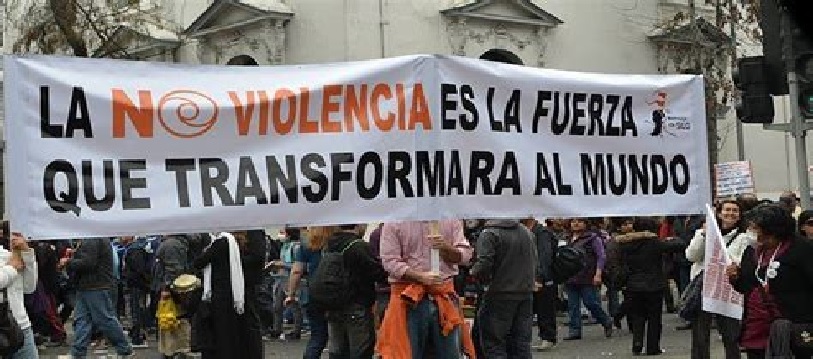
With a powerful declaration calling for the defense of human rights, real democratization, and active nonviolence as a method of action and way of life, the Fourth Assembly of the World Humanist Forum concluded on Sunday (25).
On the second day of the Fourth Assembly of the World Humanist Forum, activists worked on consolidating proposals and planning concrete actions in seventeen areas, with a commitment to amplify and articulate the voices of the majority who demand and long for a radical global transformation.
The diagnosis made during the first day was clear and forceful. There is a growing gap between the aspirations of the people and the decisions of political and economic leaders. Leadership inconsistency, democratic deficits, inequality, the climate crisis, authoritarianism, and misinformation are intensifying global instability.
As one of the participants put it very clearly: “The system is killing us.” And it was not a rhetorical phrase. Hunger and misery, rampant arms buildup, racism and discrimination, violence against women and children, the expansion of crime and organized crime, the proliferation of hate speech, environmental catastrophes, among other indicators, show the brutal ineffectiveness of the system and its promoters in providing a better life for people in today’s society.
Despite this, the collective analysis emphasized that the initiatives of civil society and humanist associations around the world demonstrate constructive alternatives and offer reasons for hope. A new world is emerging, and these are the signs that must be made visible and strengthened.
The position and attitude of the World Humanist Forum in the face of the current global crisis
Those attending the conclave stressed the importance of affirming human rights as the basis for deepening human relations, as a guarantee of survival and a revolutionary horizon for public policies that ensure, in an equitable and effective manner, quality of life for all people.
Along with this, they considered the need to modify the models that prevail today, remnants of the rise of the bourgeoisie in previous centuries, in favor of a decentralized political organization in which democracy and pluralism are real and come from the social base itself, including inclusive, transparent, and responsible systems of governance.
They placed in the deliberations the urgency of addressing pressing global challenges, such as climate change through immediate measures and long-term environmental responsibility, and leaving behind inequality, repression, conflicts, and disasters through solidarity and global cooperation.
Nothing should stand in the way of establishing peace, with reference to the destructive attitude evidenced today by the growth of military arsenals and the manifest aggressiveness of the declining power. However, to achieve true and lasting peace, it will be necessary for peoples to adopt nonviolence as a way of life.
Another priority highlighted by this Fourth Assembly is the effort to empower marginalized groups, prioritizing women, minorities, and LGBTQ+ communities. At the same time, in a longer-term process, strong emphasis was placed on education as a tool for empowerment, justice, and transformation.
Humanism, which exists under various names and forms in different cultures at different times, is essentially inclusive and universal, and its meaning must transcend all divisions of identity, based on shared human dignity.
Furthermore, it was emphasized that Humanism is a lived practice, not a mere abstract ideal, which promotes education, solidarity, and community action.
Strategic action
Today, it is necessary to renew organizational forms and modes of collective action. Coordinated global action requires articulation with multiple organizations and adaptation to rapid technological advances. However, the key lies in promoting a community-based approach from the grassroots level and valuing youth as the main agents of change. It is essential to create welcoming spaces that generate trust, affection, inclusion, and hope.
For humanists, alliances, networking, and reciprocal collaboration with other organizations are very important, but this does not mean diluting their own proposals. On the contrary, the moment calls for visionary, innovative images and demonstrative examples that help overcome indecision and despondency. Building utopia from a “we” perspective is the way forward today.
The strength of peoples and civilizations has always emerged from their founding myths. Myths that lie deep within the human consciousness. Therefore, the best aspirations will be realized if activists manage to connect with that source and, from there, reach communities with a renewed social myth.
From dialogue to action
Among the main actions proposed at this Fourth Assembly is, first and foremost, participation and the generation of actions at the grassroots level, supporting and working with discriminated sectors and generating solutions in all fields “from below,” from the particular and local to the general.
Likewise, the construction of community networks and nonviolent alliances, together with the development of alliances for access to education and action in favor of caring for the planet and supporting new models of democracy, are among the agreed priorities.
Rejecting militarization, promoting decolonization, and actively contributing to Nonviolence Week and the 4th World March for Peace and Nonviolence are other upcoming guidelines for action. Similarly, promoting international solidarity initiatives and adhering to the call for a World Citizens’ Assembly within the framework of a democratic reorganization of the United Nations were other actions mentioned at this Assembly.
Finally, continuing to strengthen the internal fabric of the World Humanist Forum through the expansion and formation of new thematic committees, together with increasing the visibility of the Forum through the media and social networks, are priorities for this area to expand its role as a reference point in the social sphere.
The Fourth Assembly culminated with an emotional statement, which we reproduce in full below.
A humanist call in times of crisis
We live in a world where the hopes of the people are increasingly ignored by those in power. Inequality is deepening, democracy is weakening, the planet is under threat, and fear is often used to divide us. However, everywhere people are organizing, caring, resisting, and creating new possibilities.
The World Humanist Forum defends a humanism that includes everyone. Beyond identities, borders, and beliefs, we affirm the dignity of every human being. Humanism is not an abstract philosophy: it is what we live, what we build together, and how we treat each other.
We believe in active nonviolence as a way of life and a force for transformation. We defend human rights as the foundation of freedom, justice, and survival. We are committed to a democracy that listens, an education that empowers, and science and critical thinking as guides for our decisions.
Protecting the planet is not optional: it is essential for our survival. Climate action, caring for nature, and solidarity with those who suffer most from crises are moral imperatives. We reject militarization and authoritarianism, and we choose cooperation, empathy, and courage.
Change begins close to home: in our communities, in shared spaces, in small collective actions that grow into movements.
Young people are not the future: they are the present. Together, from the grassroots, we can move from necessity to freedom, from isolation to a shared “we.”
Another world is not only possible: it is already emerging.
The World Humanist Forum invites all people who believe in the power of humanity to build it collectively.