

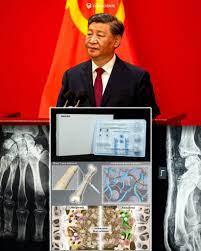
In an unprecedented scientific advance in orthopedics, a team of Chinese researchers led by Dr. Lin Xianfeng in Zhejiang Province has developed an innovative bone glue called Bone-02, capable of joining broken bone fragments in just three minutes without the need for metal plates or screws. This biomimetic adhesive, inspired by oysters’ ability to firmly adhere in wet environments, can fix fractures even in surgical settings with abundant blood, a challenge for medical adhesives until now.
Bone-02’s formula combines calcium compounds and special proteins that guarantee a strong, flexible, and safe bond. Clinical trials successfully performed on over 150 patients showed the glue’s bonding strength exceeding 400 pounds, a shear strength of 0.5 MPa, and a compressive strength close to 10 MPa, suggesting it could replace traditional metal implants used for fixing complex fractures.
Its application requires only a minimal incision, and the glue is directly introduced into the fractured area, sealing bone fragments in minutes. Moreover, Bone-02 is biodegradable, absorbing naturally as the bone structure regenerates, eliminating the need for secondary surgery to remove plates or screws, significantly reducing infection risks and recovery times.
Chinese health authorities have endorsed the development and clinical application of Bone-02, with plans to introduce it soon in the country’s hospital network, establishing it as a standard alternative for conventional orthopedic surgery. Simultaneously, industrial production capacity is under evaluation for global export, though commercial and intellectual property strategies are still being defined. China holds national and international patents on Bone-02, balancing technological protection with plans aimed at benefiting the global medical community.
This emerging advance not only positions China as a leader in medical biotechnology but also opens a new paradigm in fracture treatments worldwide, enabling minimally invasive, rapid, and less painful interventions with better prognoses for patients of diverse ages and conditions.
More broadly, China has consolidated itself in recent years as a key player in biotechnology innovation applied to medicine. With strong public and private investments, regulatory renewal, and scientific research promotion, the country has exponentially increased its production of innovative medicines, clinical trials, and new technologies, outpacing many traditional powers in volume and pace. Chinese biotechnology is characterized by combining efficiency, cost reduction, and rapid development, impacting advanced therapies such as gene therapy, monoclonal antibodies, and the intersection with artificial intelligence to accelerate drug discovery.
Bone-02 exemplifies this vanguard: a product inspired by nature and developed with high technology that could radically change how the world repairs bone fractures, benefiting millions of patients and the global health system.