

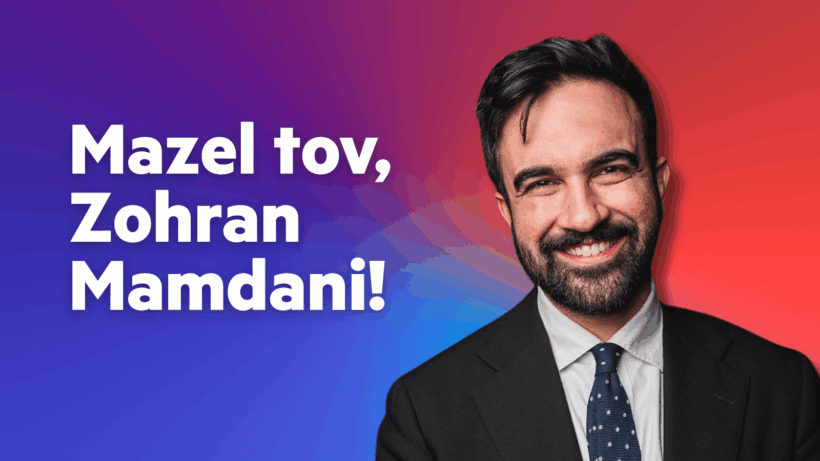
The contest for New York City’s mayoralty has always been more than a horse race—it is a referendum on values. With recent endorsements of Zohran Mamdani by prominent Jewish leaders such as Ruth Messinger, Jerry Nadler, and even the once-unlikely Chuck Schumer, the city’s political compass seems to be recalibrating. These gestures, coming from figures rooted deeply in the city’s Jewish civic tradition, are not just tactical endorsements; they are moral markers, reshaping the race against Andrew Cuomo and Eric Adams.
Endorsements as Ethical Symbols
In modern politics, endorsements often read as transactional. Yet the voices of Messinger and Nadler transcend calculation. Messinger, who once carried the banner of progressive Jewish leadership as the Democratic nominee for mayor in the 1990s, declared her support for Mamdani on the grounds of affordability, immigrant rights, and inclusive justice. Nadler, representing Manhattan’s Jewish heartland, reinforced that same ethos. Their choice signals that Mamdani is not merely the candidate of immigrant neighborhoods or younger activists, but a legitimate heir to New York’s progressive Jewish conscience.
The most surprising of all was Chuck Schumer. Long tethered to the establishment, the Senate leader’s willingness to stand with Mamdani signals an acknowledgment that the political future lies with a broad, multicultural coalition. It suggests that Jewish leadership, once instinctively cautious about leftward movements, now sees Mamdani as a vehicle for civic stability through justice, not despite it.
Philosophically, these endorsements embody Hannah Arendt’s concept of moral responsibility in public life: the willingness to align one’s authority with those who expand the circle of inclusion, rather than contract it.
Cuomo: The Past that Refuses to Leave
The ripple effects on Andrew Cuomo’s candidacy are striking. Once the face of establishment control, Cuomo’s independent run after losing the primary increasingly feels like a throwback—an echo of a politics that relied on strong-arm maneuvering and institutional loyalty. Endorsements now bypass him, not because his résumé lacks weight, but because his moral capital has evaporated.
The scandals that ended his governorship—allegations of harassment and abuses of power—resurface every time voters weigh the ethical contrast. When Jewish leaders endorse Mamdani, they are also signaling that Cuomo cannot be rehabilitated as the custodian of civic trust. Even his campaign’s attempts to frame Mamdani as “soft on crime” ring hollow when viewed against the backdrop of these moral endorsements. In philosophical terms, Cuomo represents the obsolescence of legitimacy divorced from ethics.
Adams: The Present in Ethical Crisis
If Cuomo is the past refusing to leave, Eric Adams is the present unraveling. Scandals around his administration’s entanglement with corruption and donor influence have cast a long shadow. His campaign has tried to recast him as the pragmatic defender of public safety, drawing contrasts with both Cuomo and Mamdani. Yet when Jewish leaders—historically seen as anchors of moderate, establishment-friendly politics—shift toward Mamdani, Adams’s balancing act collapses.
What Adams offers is a paradox: stability promised through relationships tainted by scandal. In the philosophical lens, he embodies Nietzsche’s notion of decadence in leadership—where appearances of vigor mask a hollowing moral core.
Mamdani: My “Second Circle” Candidate
By contrast, Mamdani’s campaign is not merely political but existential for the city’s future. He speaks the language of housing justice, immigrant dignity, and inclusive governance with fluency born of lived experience. Now, bolstered by Jewish leaders, his narrative gains a moral universality.
In fact, Mamdani’s coalition reflects what I have described as the Second Circle—an alliance-building model that transcends rigid left-right divides by uniting the moderate 99% of working people across race, religion, and class. His base brings together progressive activists, immigrant workers, secular Jewish leaders, and younger professionals—groups who may differ on certain issues but converge on core values: fairness, affordability, dignity, and peace. This is the practical embodiment of the Second Circle: a coalition resilient enough to withstand the attacks of entrenched elites, yet inclusive enough to carry moral legitimacy.
Media Silence and the Journalism of Exclusion
Yet even as Mamdani garners diverse endorsements, one cannot ignore the silences of the so-called “liberal media.” Outlets like The New York Times and CNN, while lavishing coverage on Cuomo’s re-entry or Adams’s controversies, have consistently marginalized Mamdani’s rise. The endorsements of figures like Bernie Sanders, Messinger, and Schumer would normally dominate headlines; instead, they are relegated to sidebars.
This is a textbook case of what I call Journalism of Exclusion—a media pattern in which stories that challenge the ruling elite’s narrative are omitted or downplayed, while the establishment’s agenda is amplified. Mamdani’s campaign, which threatens entrenched financial and political powers, is subjected to this selective visibility. The media’s silence is not neutrality; it is complicity.
The Ethical Arc of This Election
The philosophical heart of this moment lies in the redefinition of legitimacy. For decades, New York’s mayoral politics oscillated between managerial technocrats and machine politicians. Endorsements like these destabilize that pattern. They declare that legitimacy is no longer rooted in transactional power or administrative muscle, but in moral coherence and civic imagination.
For Cuomo, the Jewish endorsements are a quiet but decisive repudiation. For Adams, they erode his claim to be the moderate center. And for Mamdani, they are both coronation and challenge: recognition that his candidacy embodies the city’s yearning for ethical politics, and proof that the machinery of Journalism of Exclusion will continue working against him.
Conclusion
What these endorsements tell us is that New York’s moral compass is shifting. Jewish leaders, once anchors of the cautious center, are now aligning with a candidate of the bold progressive left. That shift says more about Cuomo and Adams than about Mamdani: it underscores their ethical bankruptcy while elevating his legitimacy.
In this light, Mamdani’s candidacy is more than a campaign—it is a Second Circle movement, a philosophical proposition that power in New York must once again serve the people in their diversity, not the machines of self-interest. If that proposition carries him to victory, the city may find itself not only with a new mayor but with a renewed moral foundation—despite the exclusions of elite media that try to deny his place in history.



