
On Saturday, March 28th, a clear and majestic sun shines over Southern California, its usual peaceful glow watching from above as thousands of festive people invade beaches, parks, and streets to celebrate No Kings Day, which in recent years has become a symbolic day for the defense of democracy in the country.
With each new edition, the events increase: more than 3,000 demonstrations are planned for today, and approximately 9 million participants are expected. Around here only, there are about seventy on the calendar: some are in iconic locations like Santa Monica, Beverly Hills, Venice, and Hollywood; even Malibu and Newport Beach are appearing; a myriad of small towns scattered across the hills are participating, such as Filipinotown, Santa Clarita, Santa Ana, Anaheim (home of Disneyland), Orange, Aliso Viejo, and others. Even towns on the edge of the desert like Victorville, or hidden in the mountains, like San Bernardino, are also on the list. I’m spoiled for choice.
I decide to head toward the ocean to Laguna Beach—in Pacific towns, the beach and piers serve as our public squares. I’m not late, yet the line of protesters is already long and in place. Luckily, I find a parking lot not too far away and I mingle with the crowd to take photographs. There’s no march planned, but rather a standing group, a rally where signs and flags are displayed on the side of the road; anyone passing by is encouraged to honk and shout out their windows. We’re on the Pacific Coast Highway, and along this stretch, traffic is at a walking pace almost every day; it’s another way to stroll.
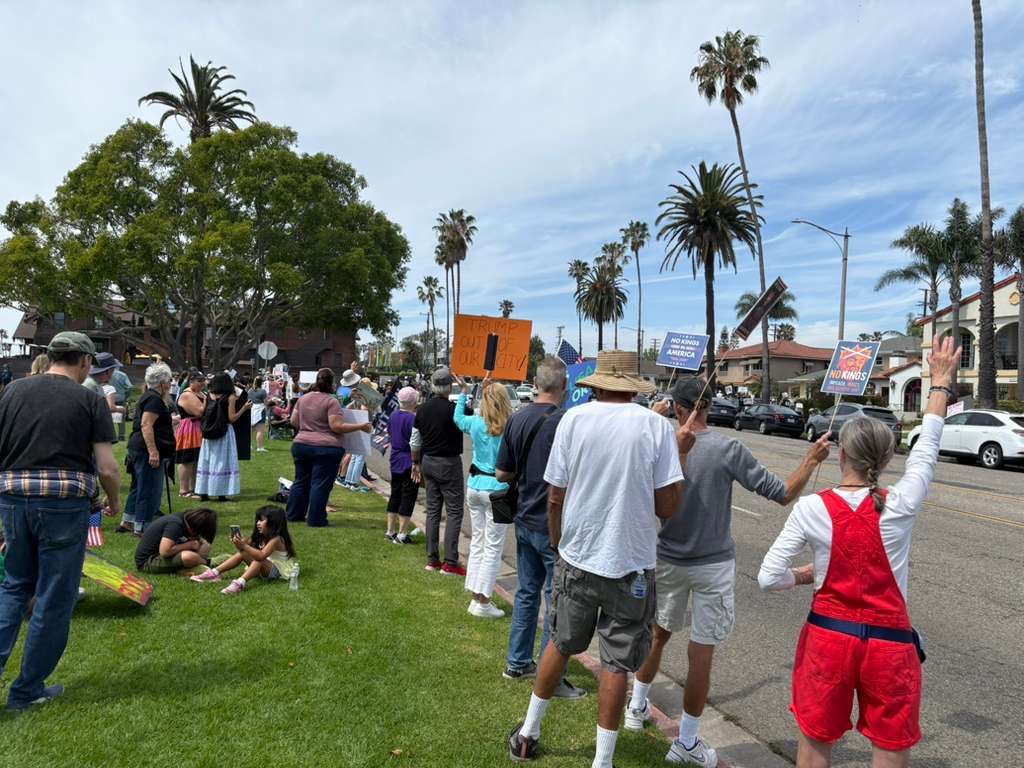
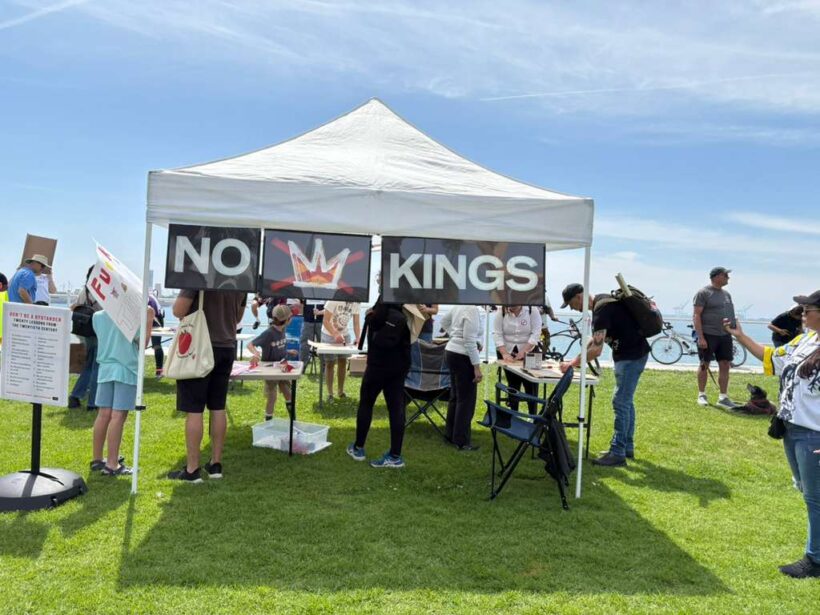
Most people have made their own signs, but if you don’t have one, there are some “guys” on the lawn who will make one for you on the fly.
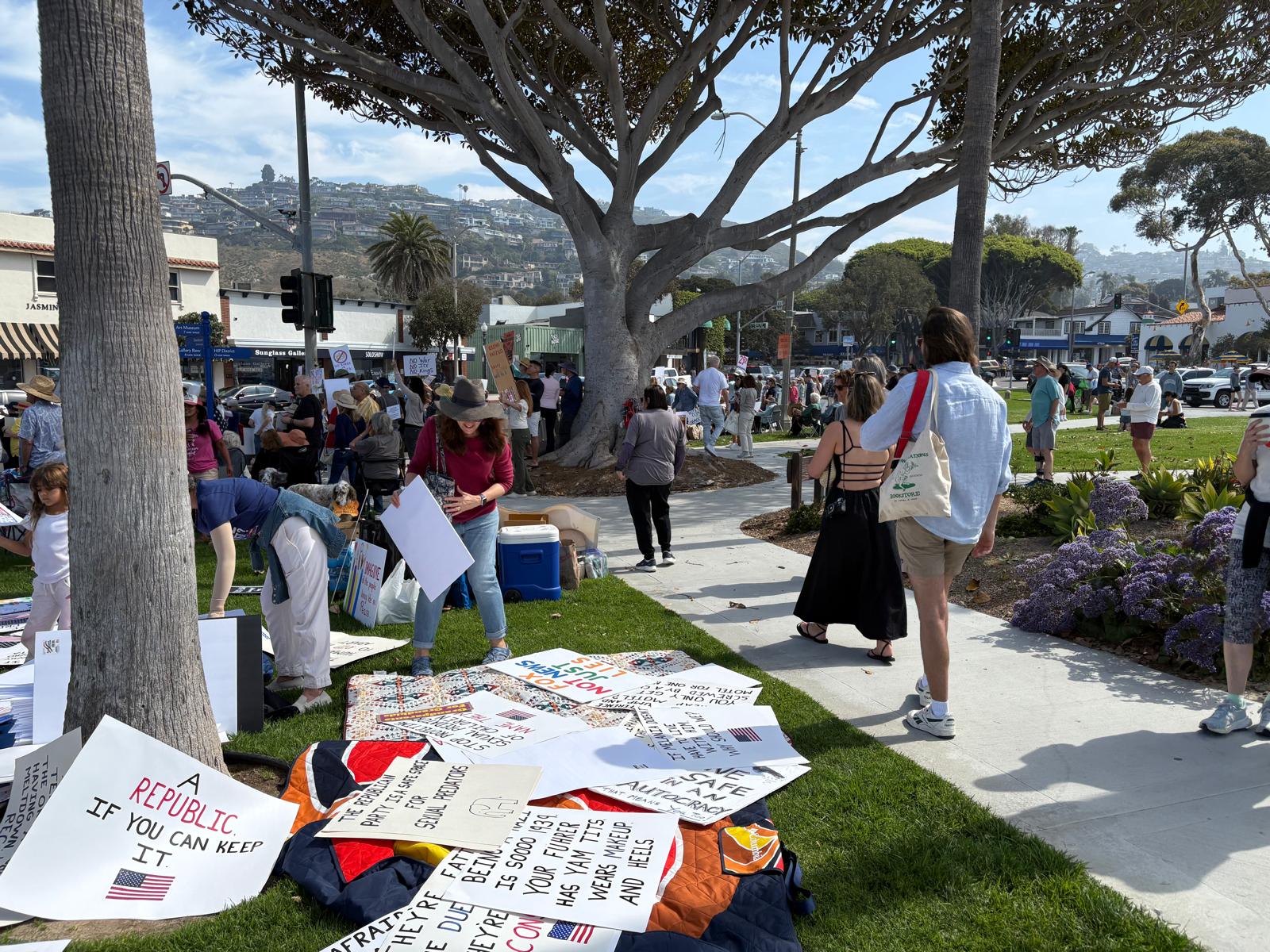
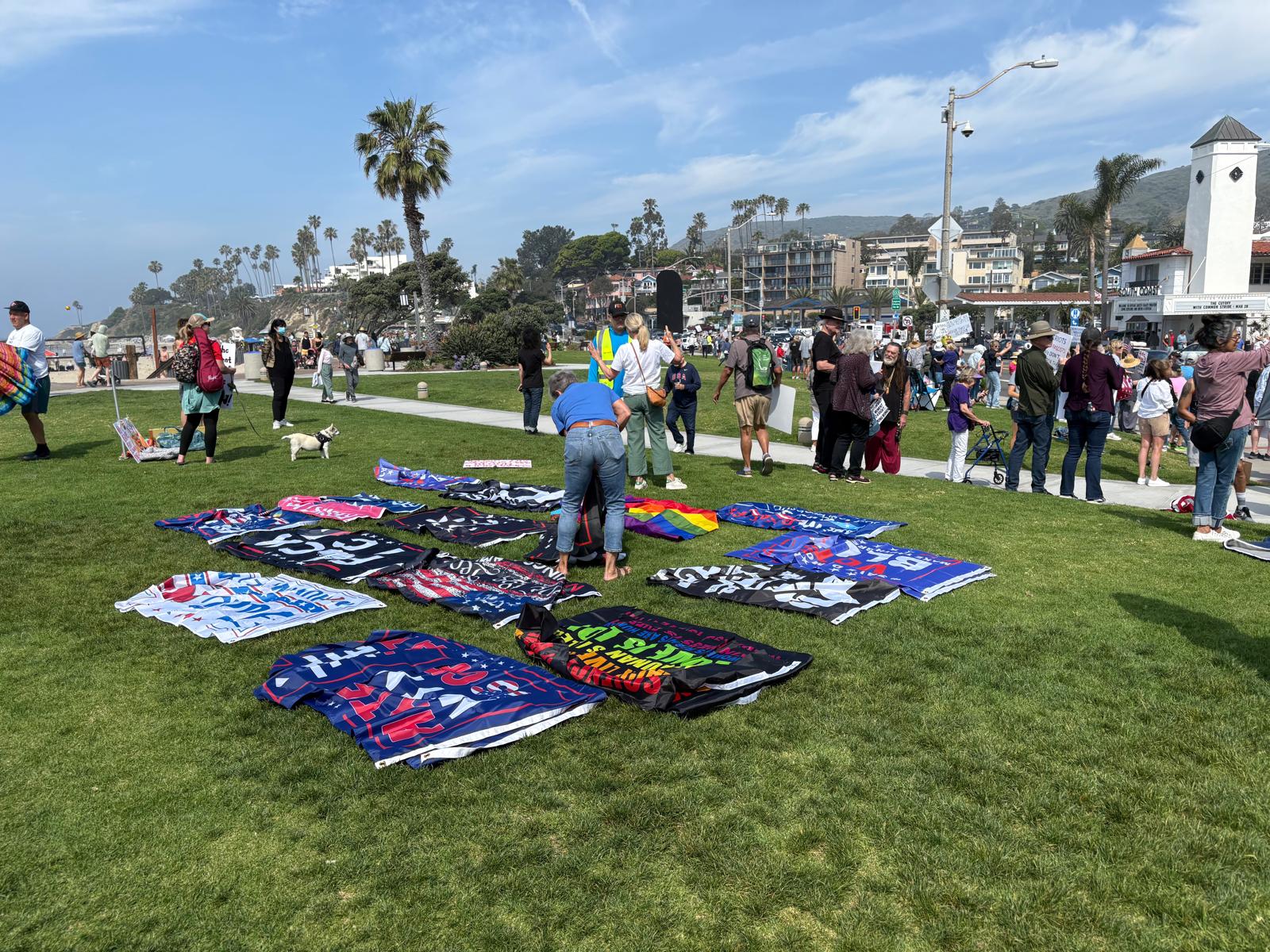
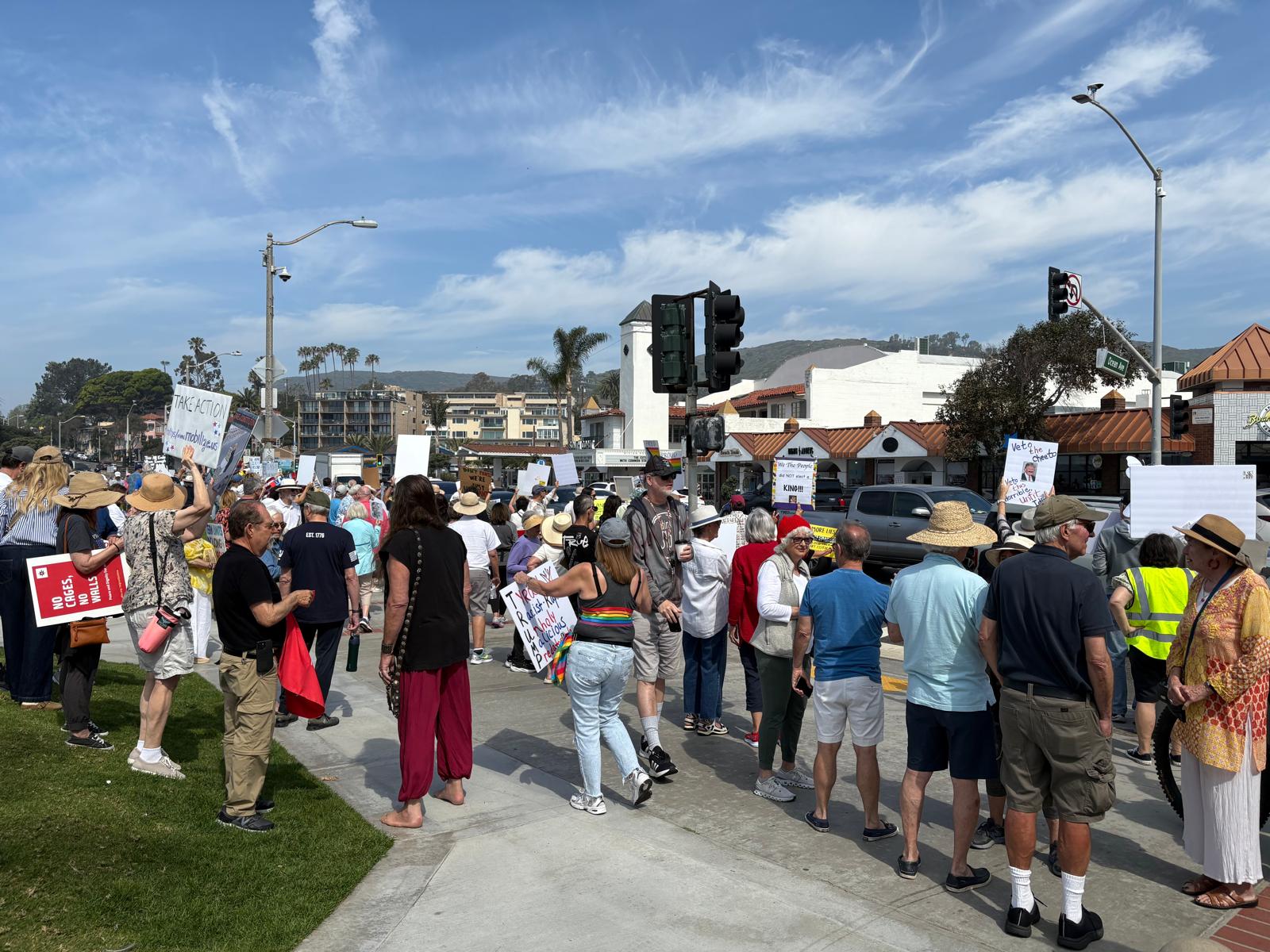
The Laguna area is a favorite with artists, who often choose it as a peaceful retreat. I’ve noticed refined and playful creativity: for example, one gentleman painted a Monarch butterfly, California’s iconic butterfly, and wrote underneath, “This is the only orange monarch I want to see!” In the 1980s, the butterfly was practically extinct due to pesticides and pollution. In recent years, Californians have finally been celebrating its return. Indeed, I was amazed to learn that, despite being a migratory butterfly, it leaves the Rocky Mountains when winter arrives; [but] the individuals that descend to Southern California settle permanently and never migrate again. For years, the state has been campaigning to save it, and nearly every Californian has created a sanctuary for it in their garden. The technique seems to have worked (though I wonder why we always have to see the worst in ourselves to bring out the best in ourselves, and the No Kings are no exception).
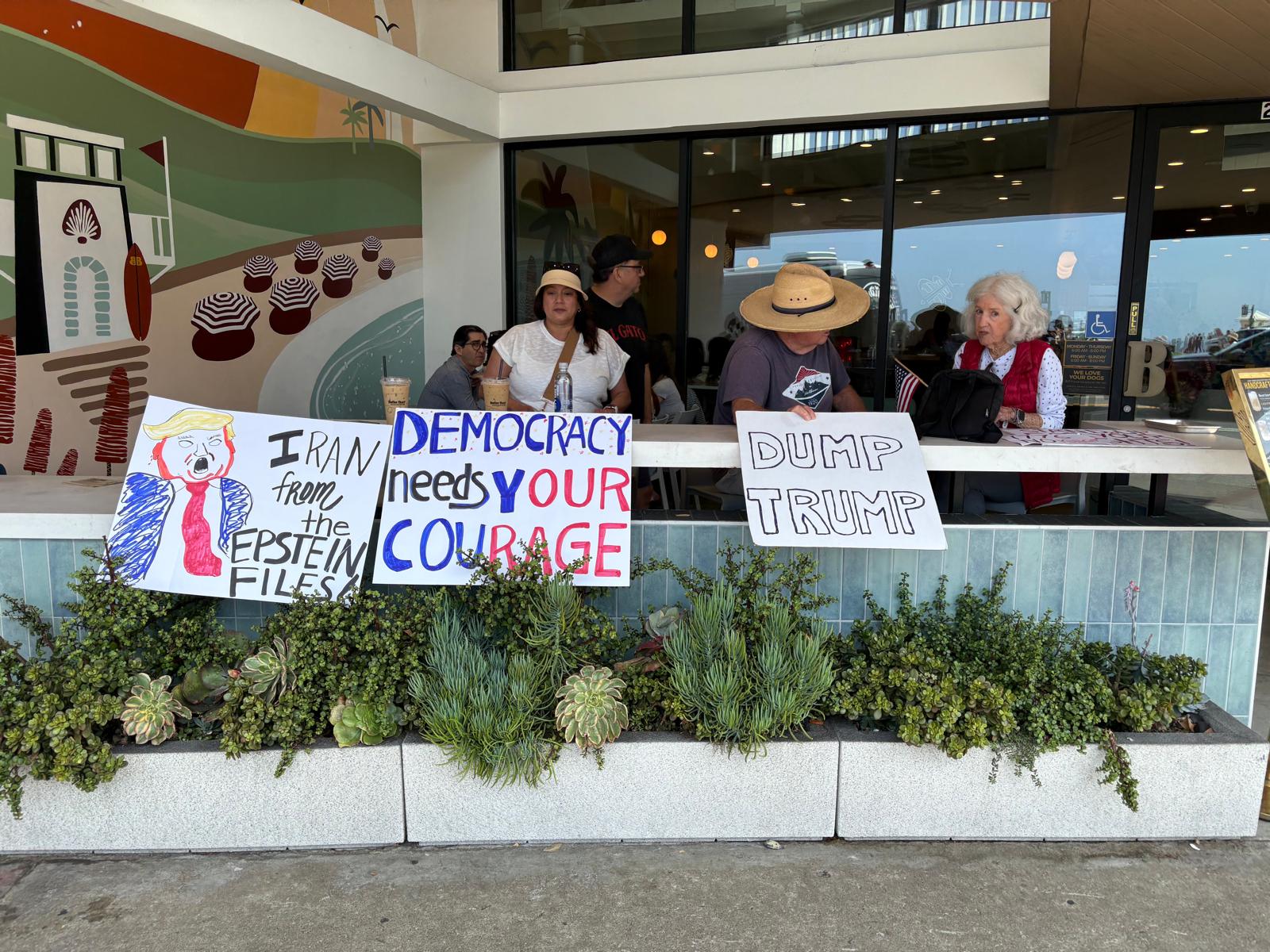
As I walk back to the car and fly toward Long Beach, three signs hang outside a bar, and one, next to Trump’s face, features a pun that perfectly captures everyone’s sentiment: “I RAN from the EPSTEIN FILES.”
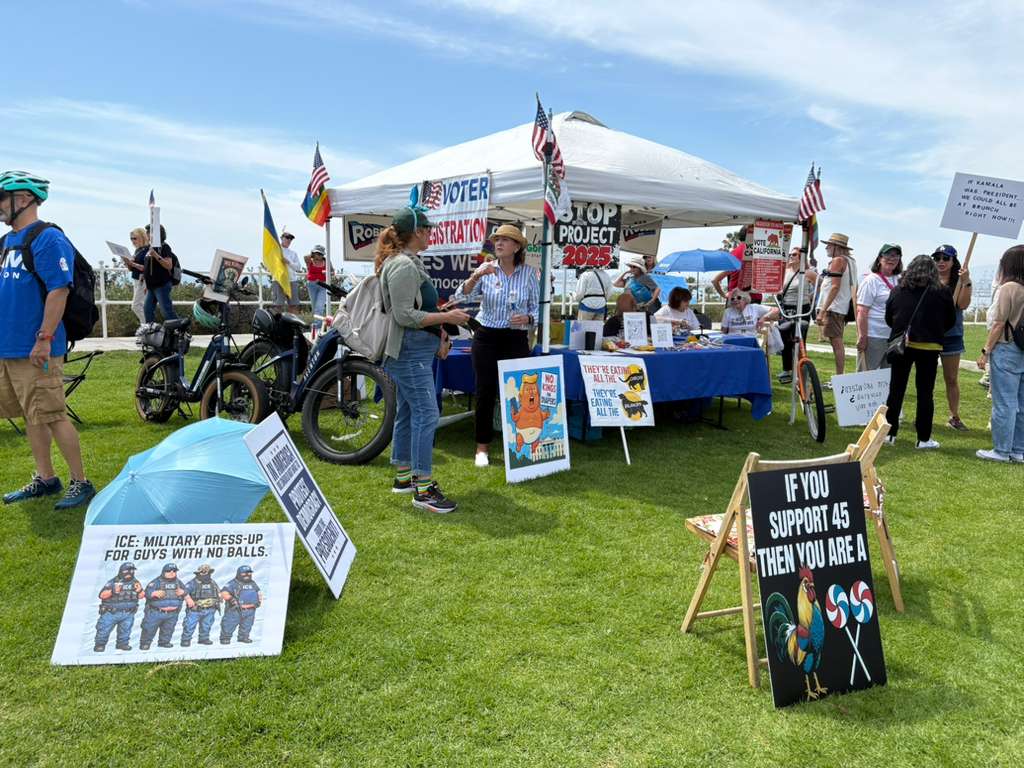
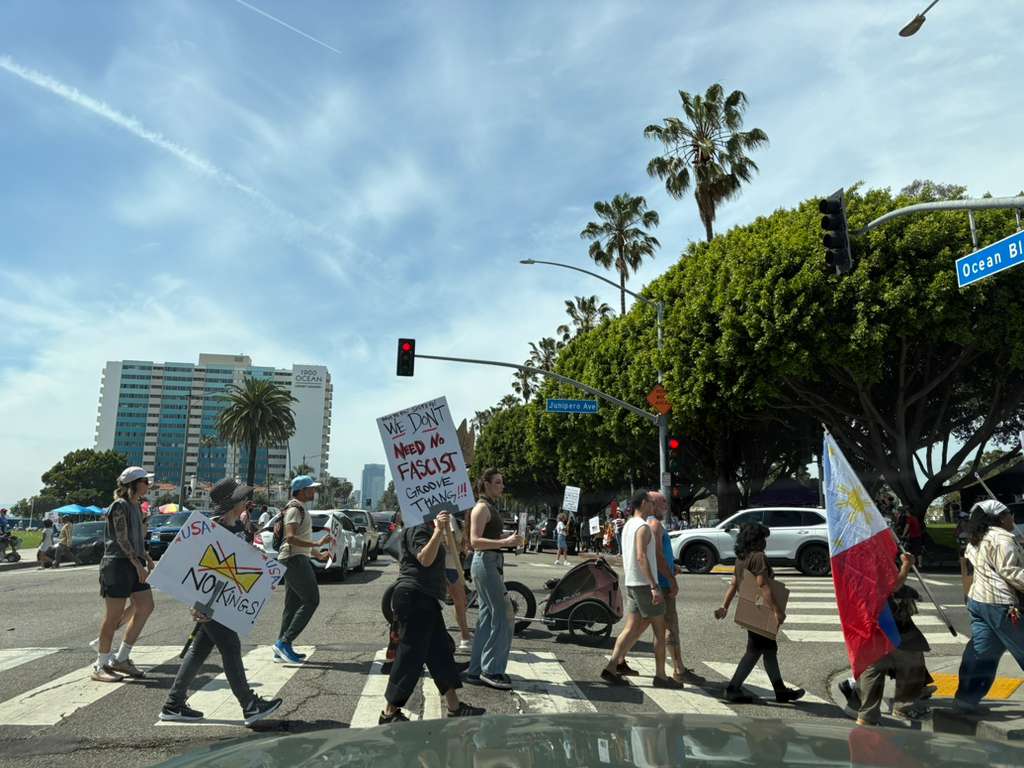
The Long Beach demonstration takes place almost entirely in the park above the cliffs and, perhaps in homage to the roaring ocean, is impressive. Once again, I notice the conspiratorial chirping between those on the roadside and those in cars. Here, it almost seems as if they’ve reached an agreement: many have brought beach chairs and are sitting comfortably with signs on their laps, while drivers, in addition to honking, display signs from their windows or taped to their hoods. Behind them, in the perfect grass of the park, a real celebration comes to life, much like a village festival: a long line of stands and stalls, not selling churros and candy, but slogans and information on how to get involved in the movement. Some are collecting signatures.
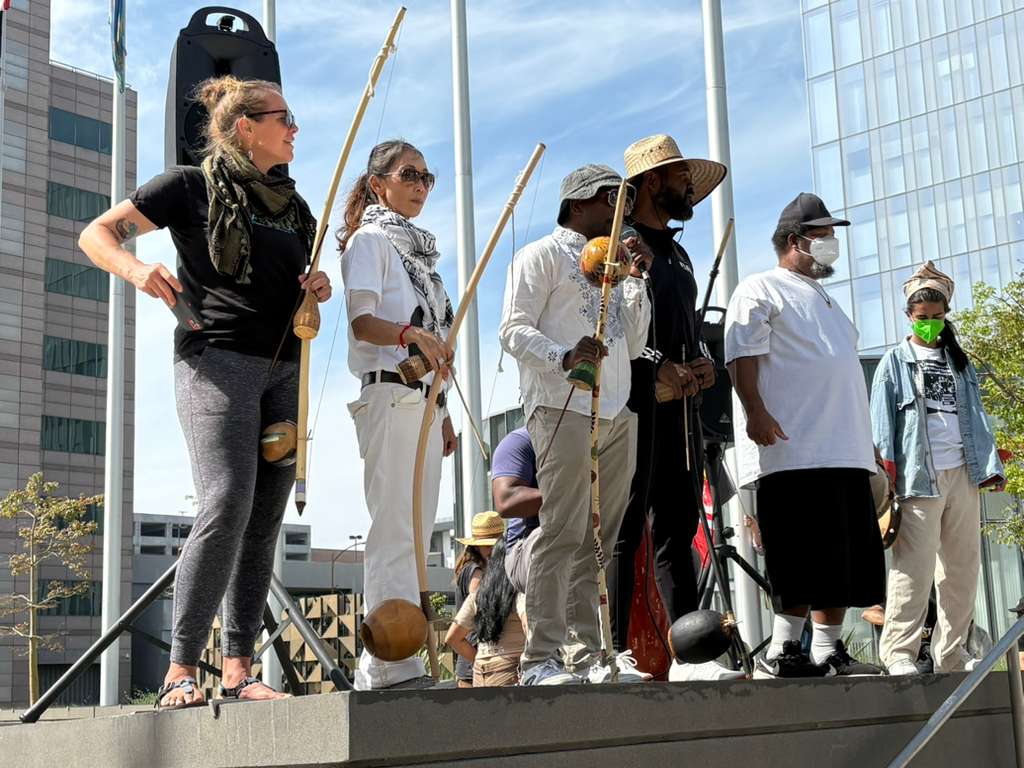
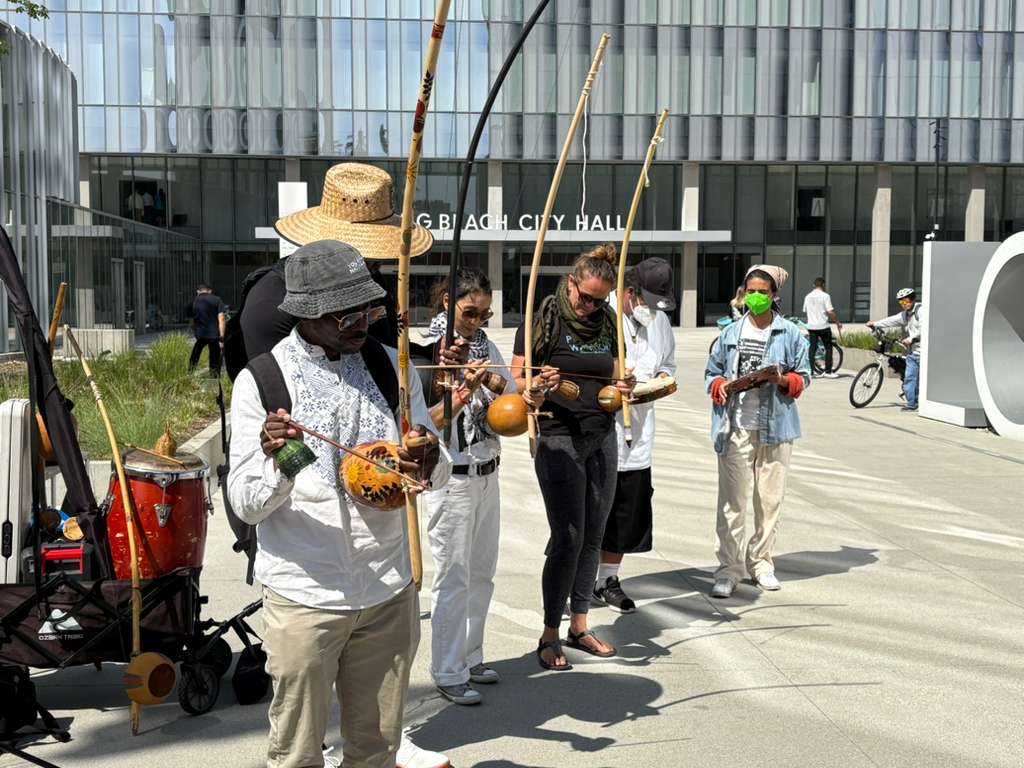
The people of Long Beach are colorful, of all ages, and display a fresh, irreverent, and unbridled creativity. Some are dressed in drag: there’s a pair of crowned frogs strolling hand in hand, a Statue of Liberty that, fed up with being violated, has beheaded the redhead, while another, less bloodthirsty, hands out anti-ICE whistles. Some sing ancient and timeless hippie songs while accompanying themselves on guitars, others stroll, and others rest at the foot of the tall trees. I’ve been walking for almost an hour and still don’t see where the fiesta ends, nor will I. I promised Aki, a Japanese friend who practices capoeira, that I’ll be in public. Her group, along with a native duo, will close out the day of celebration and civic engagement. I get back in the car, intending to reach the square in front of the City Hall, where a procession will arrive—it’s there, but I don’t know where it is—and they’ll be singing songs of freedom. In the maddening traffic of No Kings Day, just when I thought I’d given up hope of making it to the meeting on time, I see the small group of capoeiras getting ready; I arrive just in time to see the procession ascending the steps of the square, chanting “This is what democracy looks like!”