Several years ago, I read an interesting article about a place where urban planning had favored the periphery over the center; this concept gave rise to modern network cities, a system of nodes where each becomes a center. The idea immediately struck me as much more democratic and horizontal than the classic vision of a single hub where everything converges.
I remember being excited by the topic, but I never imagined I’d live in a place like this. And yet here I am: in sunny and once-sleepy Orange County, south of Los Angeles. It’s no longer dormant, having risen up against the policies of the Trump administration, both domestically and abroad; here too, protests, demonstrations, rallies, and stalls are now a daily occurrence. They’re scattered throughout every corner of the county, or rather, they proliferate at almost every node of the immense conurbation that extends from the Mexican border to beyond the city of Los Angeles, encompassing several cities and counties.
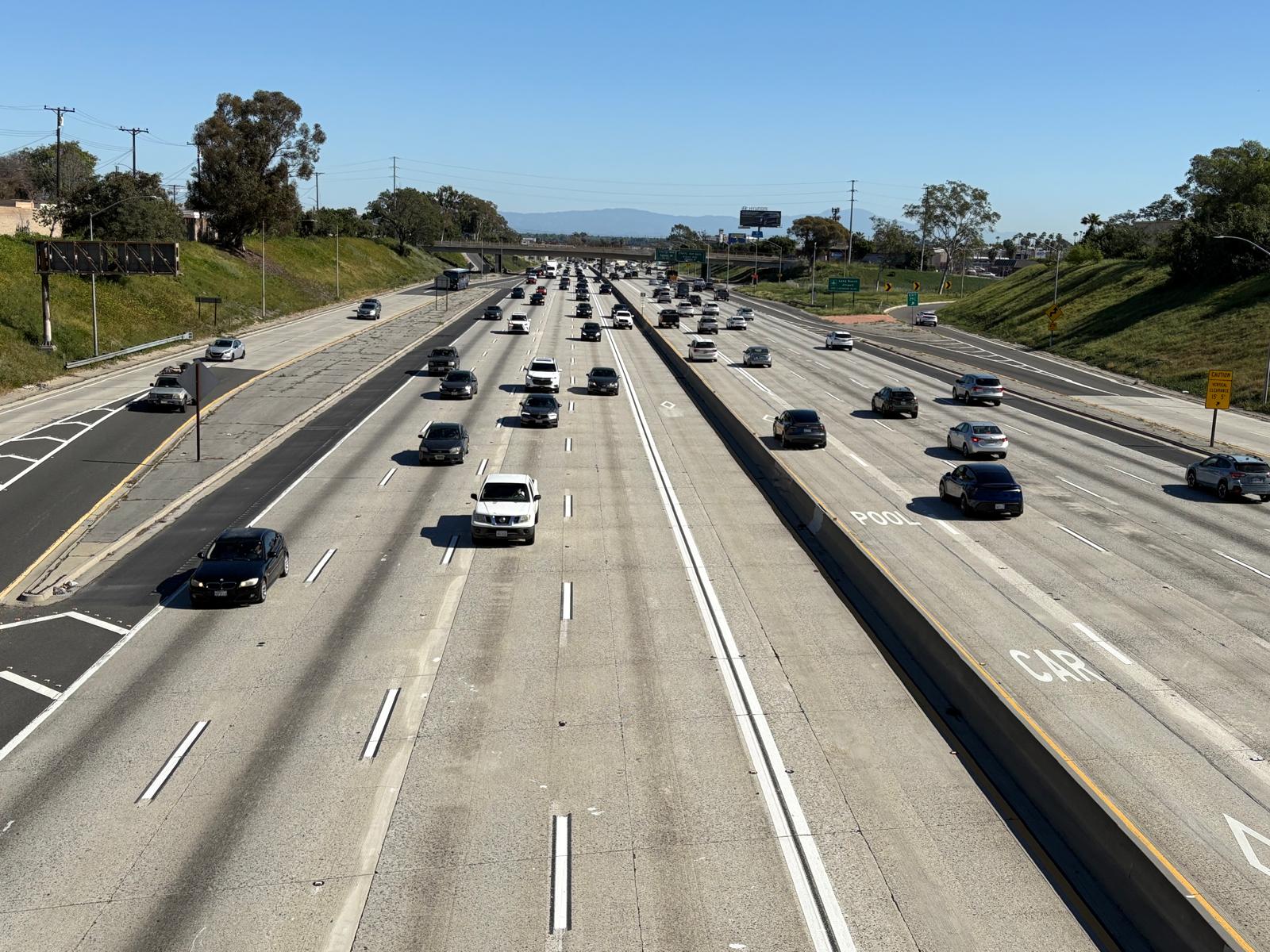
I decide to join the group from Long Beach (a town on the border between Orange and Los Angeles counties), which for two years has been unfurling long banners and lowering them from the overpasses of California’s mega-freeways.
As I descend the ramp to enter the hub, I realize I’m a little nervous (from the article, I hadn’t quite grasped that the thousands of hubs are connected primarily by freeways, which initially unsettled me). I’ve been missing the meetings for a year and hope to see some familiar faces. I leave my car in the gigantic parking lot of a shopping center (it could roughly hold four or six Ipercoops) and walk to the meeting point, which is a few hundred meters away. The local road where we’re staying has two lanes on each side plus a security station.
We need to familiarize ourselves with the California measures and understand them clearly, otherwise we won’t understand the significance of these protests, how [people] organized themselves locally, and how they managed to exploit and bend [the space] to their own ends. For someone like me, who grew up in a typical Italian city with its main street and Piazza del Duomo, and accustomed to shopping by bicycle, it was unthinkable to imagine actions in spaces of this scale. Where should we call a rally? What route should we choose for a march? What iconic symbols should we rely upon? The pier and the beach? Everywhere you turn, you always feel like a little ant, towered over by concrete towers and gigantic ramps. Where I am now, in addition to all that, there are the pumps that extract oil. They resemble huge iron grasshoppers, their mouths constantly rising and falling. They’re everywhere: in fields and along roadsides, as well as in the gardens of charming little houses; often they’re private, family-run extractions.
But even in a place like this, where spontaneous gathering seems unnatural (let alone to fight a battle of civilization), where centrifugal forces seem constantly at work pushing people apart, people have found ways to connect and impact their community by exploiting the intrinsic characteristics of the land, its very expansive force. They are a precious example of the adaptability of the spirit; when it wants to be creative, there is nothing that can stop it. If the network’s nodes could light up to show the ongoing political activity, they would shimmer at night like plankton in the ocean.
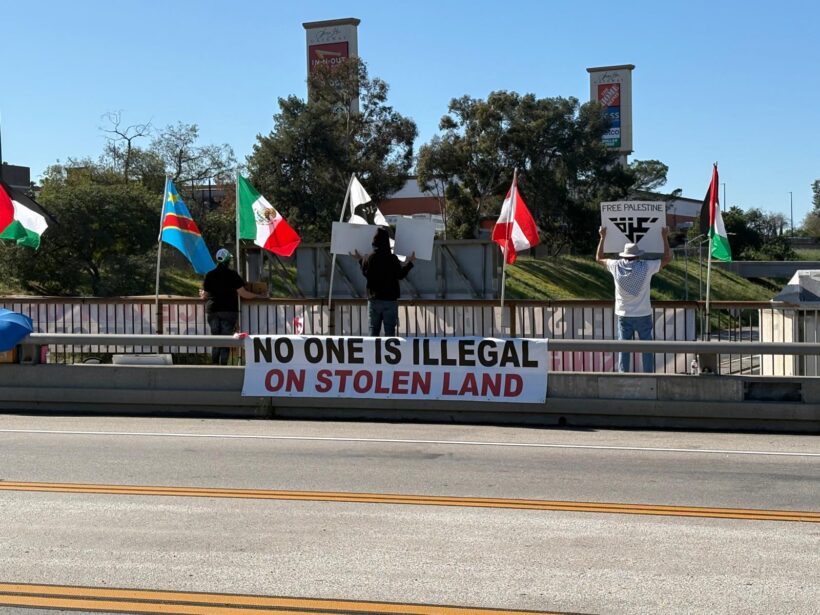
The entire span of the highway is covered with banners denouncing the genocide of the Palestinian people, telling the ICE and the government to go to hell, and inviting thousands of motorists to join the fight. Today we hung about twenty [banners]; on the upper level, that is, on the overpass where we are, flags symbolizing the many causes at stake are hoisted.
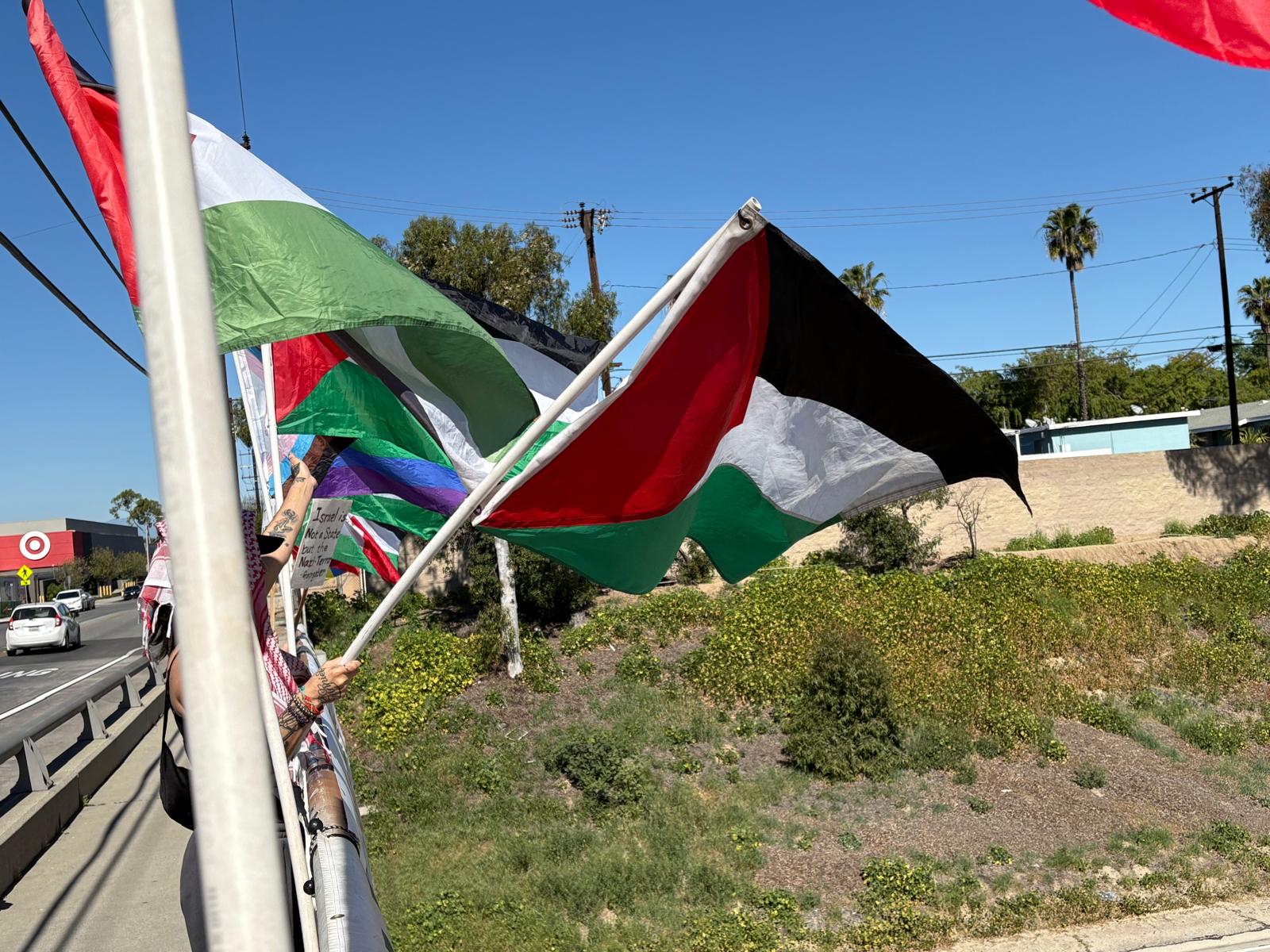
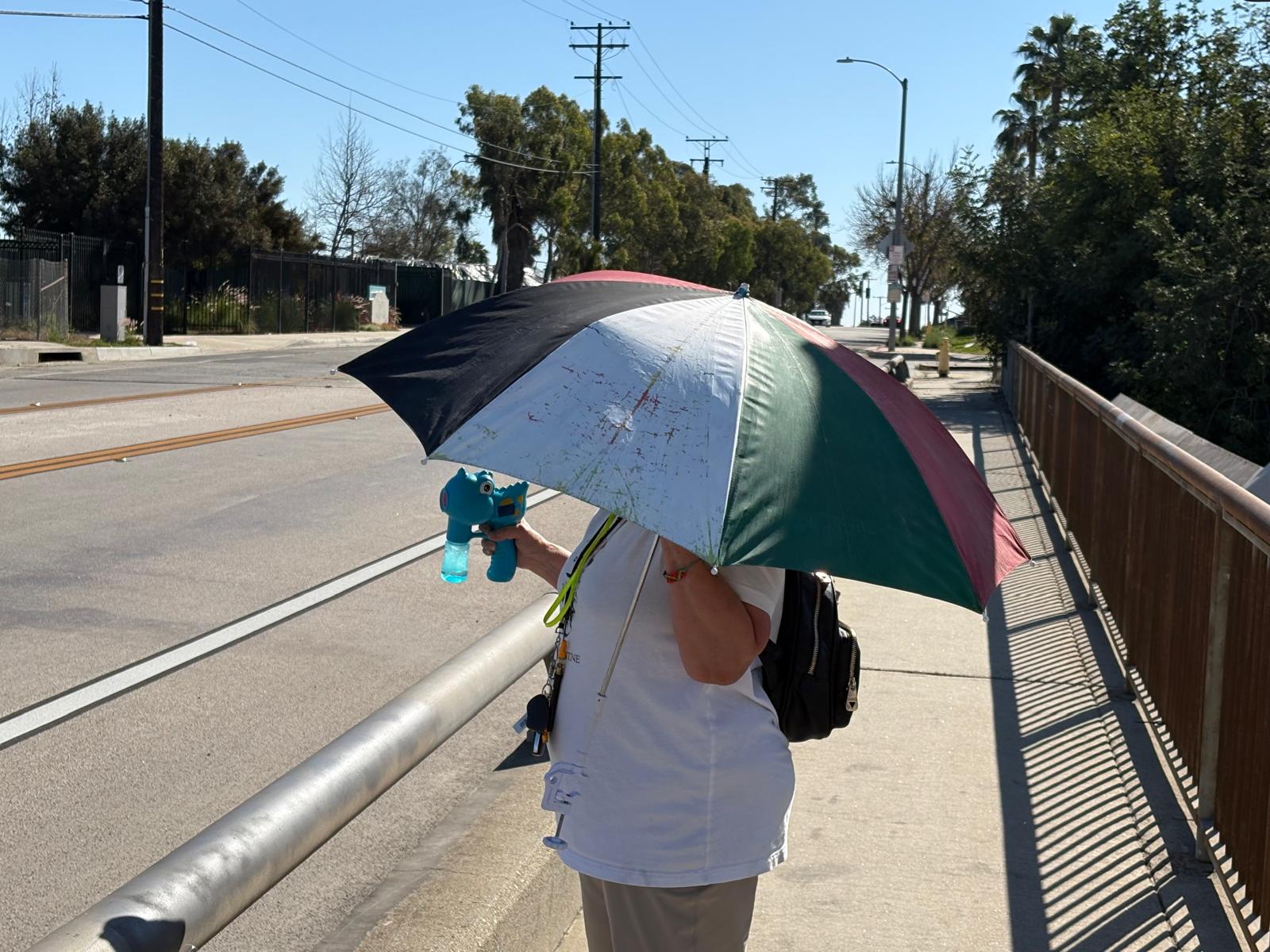
At first, the emergencies seemed to be limited to Palestine, but month after month, if not week after week, emergencies in Lebanon, Syria, Venezuela, Mexico, Greenland, the transgender community, and elsewhere were added to the list. For the well-being of participants, light refreshments such as fruit, snacks, and water are always provided.
There are four groups active in this area of the county, which manage to be present four days a week at various busy traffic points. A little further north of where we are, they go early in the morning to intercept trucks leaving Maersck (a logistics and transport company that has no qualms about carrying weapons destined for Israel and other infamous wars).
As I approach, I see a young woman with a bold demeanor who reminds me of S. She climbs over the guardrail and comes towards me. It is S. She hugs me tightly. S. belongs to an Armenian-Syrian family and is one of the leaders of the local protest. I ask her how things are going. She replies, “Everything has become more difficult, but there is visible progress. People are gaining a deeper understanding of the situation; they are really starting to understand. Above all, those who are privileged, those in the white community, the richest, are beginning to understand that there is something wrong with their privileged status and they no longer feel comfortable with themselves.”
Unfortunately, there is a lot of noise; after all, we are above thousands of cars speeding at an average of 130 km per hour, and we are struggling to talk.
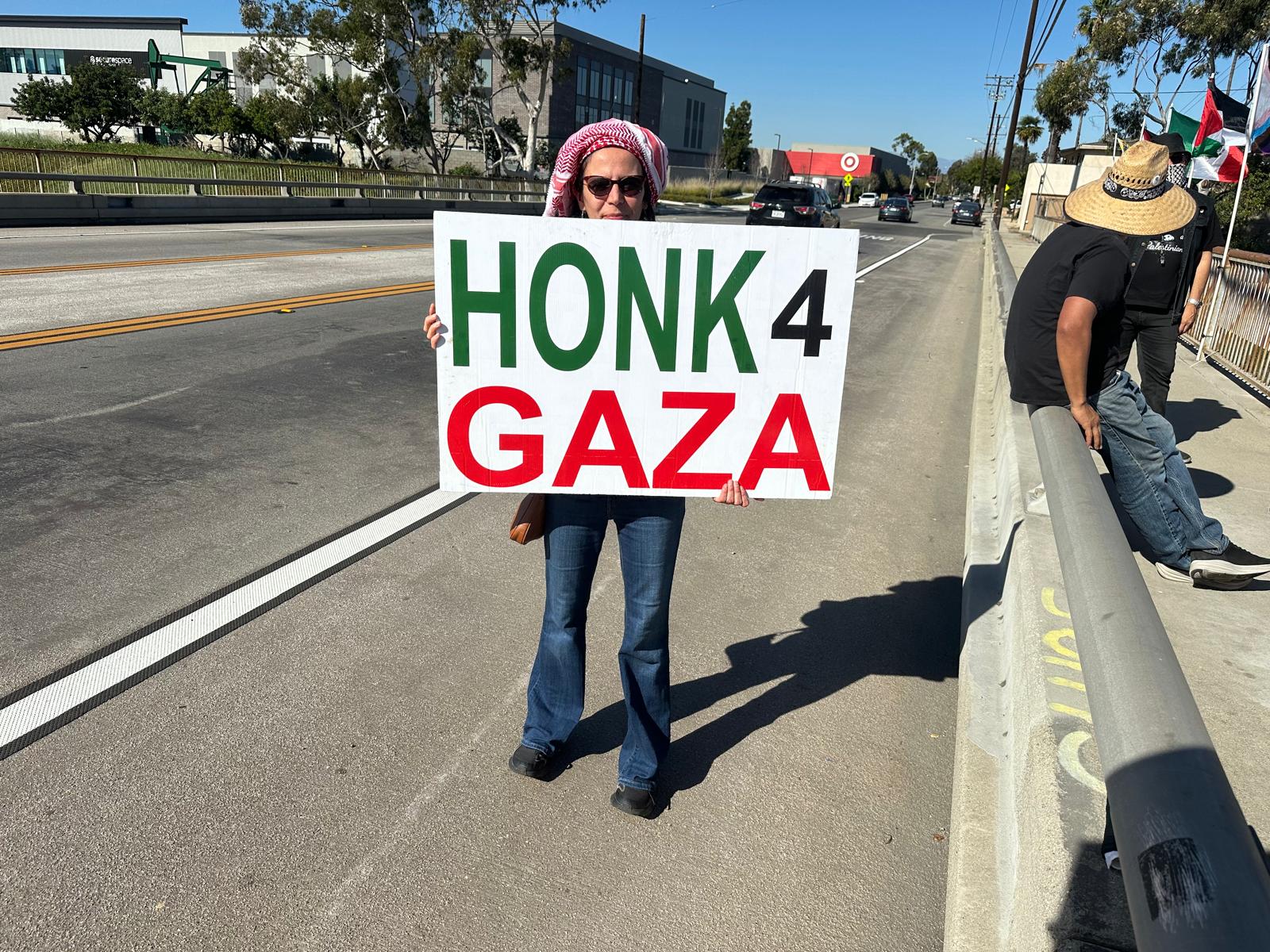
 S. says to me: “We have so much to talk about, there’s no rush.” She’s right. We hug a second time and I follow her across the road to the bag of signs. I choose “HONK4GAZA” and position myself clearly visible at the side of the road. I immediately get a loud honk of the horn and a clenched fist waved out of the window; hurrah for the solidarity of motorists!