
The United States has officially completed its withdrawal from the World Health Organization (WHO), marking a historic break after nearly 78 years as a member state and ending its status as the organization’s largest funder.
The departure took effect on 22 January 2026, exactly **one year after President Donald Trump signed an executive order on his first day in office for his second term — **Executive Order 14155 — to initiate the withdrawal. The WHO, a United Nations agency founded in 1948 to coordinate global health efforts, has never before had a member-state withdraw.
Timeline of Key Events
January 20, 2025
• On his first day back in the White House, President Trump signed Executive Order 14155, formally notifying the United Nations and the WHO of the United States’ intention to withdraw from the global health body, citing alleged mishandling of the COVID-19 pandemic, failure to adopt reforms, and political influence from member states.
January 22, 2026
• After the required one-year notice period, the United States’ membership in WHO formally ended.
• The U.S. government terminated all funding to WHO, recalled personnel from its offices, and ended participation in WHO leadership bodies and technical groups.
• The WHO noted that the United States still owes significant unpaid contributions for fiscal years 2024 and 2025 — estimated at roughly $260 million — creating financial strain for the agency.
Official Responses and Reactions
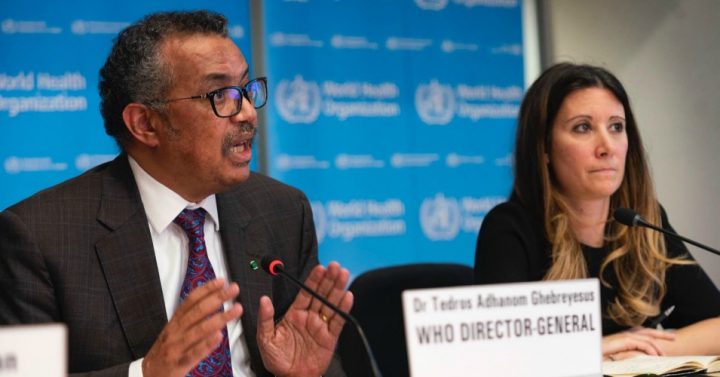
• WHO Director-General Tedros Adhanom Ghebreyesus expressed “deep regret” at the decision, warning that losing U.S. support undermines global coordination against infectious diseases — a core mission of the agency.
• The U.S. Department of Health and Human Services and the State Department justified the withdrawal by alleging WHO failures during past health crises and asserting plans to pursue bilateral collaborations with individual countries on health issues instead of multilateral engagement.
• Public health authorities, including the Infectious Diseases Society of America, condemned the withdrawal as “shortsighted” and warned it could weaken disease surveillance and response, particularly for influenza, Ebola, and other global threats.
• Some U.S. state leaders — such as Colorado Governor Jared Polis — criticized the federal decision, arguing that global health cooperation protects Americans and that states will need to strengthen their own health coordination efforts as a result.
Consequences and Expert Concerns
Financial impact on WHO:
The United States historically contributed around 18 % of WHO’s total budget. Its exit and unpaid dues have forced the agency to enact budget cuts, reduce staff, and scale back operations, raising concerns about global health initiatives in poorer nations.
Disease surveillance and outbreak response:
Experts warned that U.S. withdrawal from WHO’s data-sharing systems — such as those used to track flu strains critical for annual vaccine updates — could hinder early detection of outbreaks and weaken international preparedness.
Global cooperation and influence:
Analysts argue the U.S. exit may allow other powers — including China and Russia — to increase their influence within WHO, shifting the balance of global health policy.
Legal and procedural debates:
Some legal experts question whether a president can unilaterally withdraw from WHO without explicit congressional action, since the U.S. joined the organization through an act of Congress in 1948.
Current Developments (as of Jan 23, 2026)
• WHO member states are expected to discuss how to address the outstanding U.S. financial obligations at upcoming meetings of the WHO Executive Board in February.
• Meanwhile, U.S. health officials emphasize commitments to alternative global health partnerships, though specifics of those plans have not been fully outlined.
The exit marks a major shift in global health governance with far-reaching implications for international cooperation, disease preparedness, and the future role of the United States in multilateral institutions.
(AP / Reuters / WHO / Government sources) —