

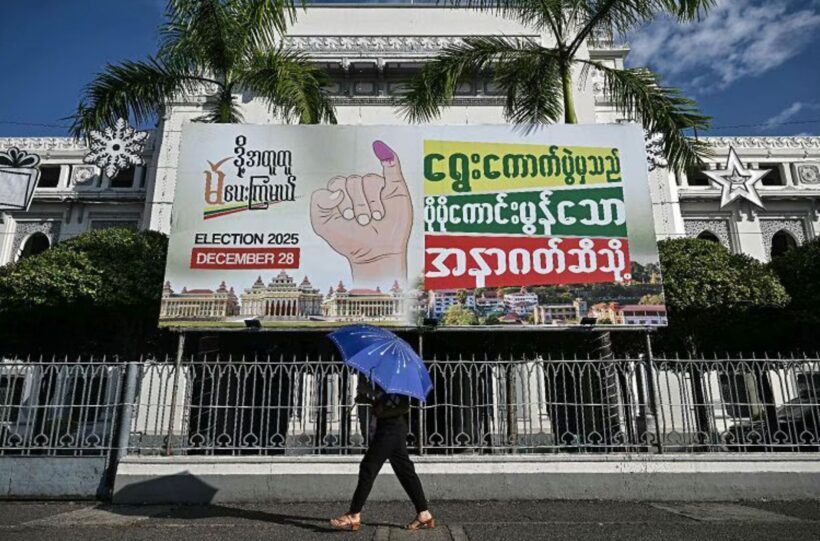
Almost simultaneously with the hearings at the International Court of Justice, which ended yesterday, January 29, and will now see the Court assessing the evidence provided by both Gambian and Myanmar lawyers regarding the genocide of the Rohingya, on Sunday, January 25, what the Burmese call sham elections came to an end in Myanmar.
This morning, after weeks of truce, fighting resumed across the border. I can hear the thunder of weapons after more than a month of silence. In Burmese territory, fighting is taking place between the military junta’s troops and the guerrillas of the Karen ethnic minority. The Karen have been fighting the military government since 1962, when a military officer named Ne Win put an end to 14 years of democratic government and, with it, the dream of a confederate Burma. Aung San Suu Kyi’s party has taken up that dream again and, since 2021, has continued the resistance and the shadow government (NUG).
Thinzar Shunlei Yi, deputy director of the ‘Campaign Against Sham Elections’ and representative of the General Strike Movement, recently stated in an interview with Inside Myanmar: “Out of a total of 330 townships in Myanmar, the junta’s phased election plan has included only 193; this suggests that the rest are in areas not controlled by the junta or where they face strong hostility. And of these 193, elections in another 56 have already been canceled, while others remain uncertain.”
For these reasons, Burmese associations, as well as the National Unity Government (NUG), i.e., the democratic shadow government, are calling on the international community not to recognize the election results. The military junta has a long tradition of sham elections, which it regularly loses, triggering campaigns of arrests against elected parliamentarians and their supporters. The last democratic elections held in the country in November 2020, when Aung San Suu Kyi and her party, the National League for Democracy, were still in power, were no exception.
In reality, as stated by several Burmese commentators, the elections serve to give the military junta the appearance of a civilian government. They were strongly desired by the Chinese government, which is seeking to stabilize the area in which it has extensive economic interests.



