

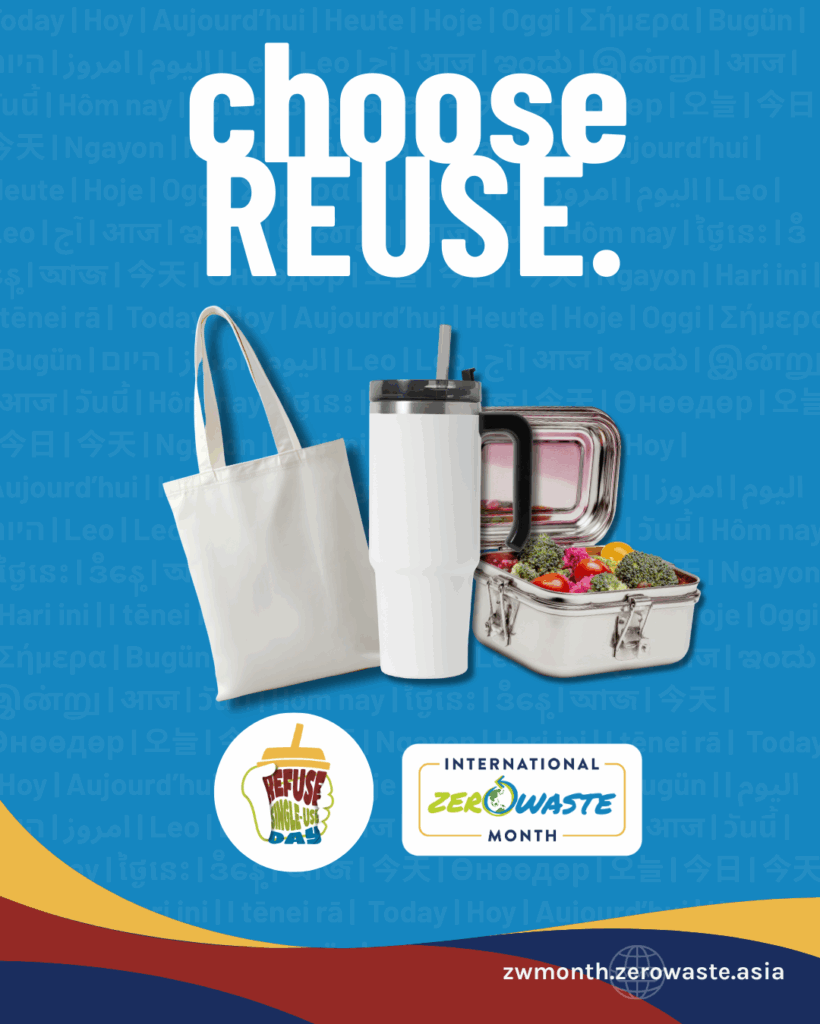
06 January 2026 – #RefuseSingleUseDay shines a light on a simple idea that feels almost old-fashioned: stop treating things as throwaways in the first place. From plastic sachets to paper cups to misleading bio-based packaging, single-use items continue to strain ecosystems and local budgets. The campaign demands a systemic shift away from the “take-make-waste” economy that has led us into the throes of a triple planetary crisis of pollution, biodiversity loss, and climate change.
Reuse offers a far more grounded approach, and many communities are proving that it works. Reuse systems rely on durable products and toxic-free packaging designed for repeated cycles of use. This cuts waste at the source, reduces reliance on costly disposal systems, preserves natural resources, and supports the local economy with green jobs. Around the world, local initiatives show how reuse can work in practice. In Asia, the Kuha sa Tingi (take by small amounts) refill system in the Philippines, crockery rental banks in India, reusable tableware services in Hong Kong, and Vietnam’s Refillables Dong Day demonstrate that reuse can fit many cultural and economic contexts.
In much of the Global South, reuse and refill are hardly radical ideas. Not long before companies brought single-use to our homes, people topped up their containers at neighborhood shops, borrowed shared items for gatherings, and passed along used objects for generations. These long-standing habits prove that reuse is practical, shaped by local knowledge, and protects cultural identity. The recent influx of investment and policy support is simply helping scale models that have worked for generations.
While these practices never disappeared in many parts of the world, Europe is now showing how policy and investment can bring reuse to a city-wide scale: municipal policies, shared infrastructure, and programs like the Elevating Reuse in Cities (ERIC) and the RSVP Reuse Blueprint are turning pilots into city-wide solutions with deposit-and-return schemes and public procurement strategies that create local green jobs.
Reports such as The Economics of Reuse Systems and Unpacking Reuse in Asia outline the social and economic case for reuse. Citing business initiatives, the reports recommend stronger policies that include Extended Producer Responsibility fees that help fund reuse infrastructure and place clear responsibility on producers and public authorities.
” Reuse cannot be treated merely as a pilot—it must become the new norm within production and consumption systems. Moreover, several Southeast Asian countries have already established national roadmaps, which can serve as a strong foundation aligned with the waste-reduction ambitions of the Global Plastic Treaty,” stresses Rahyang Nusantara of Dietplastik Indonesia, a co-convenor of the Asia Reuse Consortium – a collaborative network of CSOs, businesses, and government officials dedicated to promoting reuse as a sustainable alternative to single-use packaging.
This January 6 marks Refuse Single-Use Day, a global initiative launched in 2023 to push back against our throwaway culture. The campaign unites businesses, governments, civil society organizations, and young people to challenge the norms of disposability. Rather than swapping one waste stream for another, it calls for reducing reliance on all single-use materials, whether plastic, paper, or bio-based alternatives. By championing real, scalable reuse systems, the movement advocates for a shift from the ‘take-make-waste’ economy to a future built on genuine reuse and zero waste. This year also marks a milestone: the second anniversary of the Asia Reuse Consortium, a key force in driving reuse collaboration across the region.
A cleaner path forward starts with funding reuse infrastructure, aligning on shared standards, and scaling local solutions that are already proving their worth. Done well, reuse doesn’t just trim waste; it protects ecosystems and creates green jobs with actual staying power. A healthier future isn’t wishful thinking; it’s practical, it’s doable, and it’s sitting in a tote bag near you. Remember—always #ChooseReuse.
————————————————————————————————————————————————————————
Media Contacts:
Dan Abril, Communications Officer for Programs, GAIA Asia Pacific | dan@no-burn.org | +639174194426
Robi Kate Miranda, Communications Officer for Campaigns, GAIA Asia Pacific | robi@no-burn.org | +63927 585 4157
About GAIA:
GAIA is a network of grassroots groups as well as national and regional alliances representing more than 1000 organizations from 92 countries. With our work, we aim to catalyze a global shift towards environmental justice by strengthening grassroots social movements that advance solutions to waste and pollution. We envision a just, Zero Waste world built on respect for ecological limits and community rights, where people are free from the burden of toxic pollution, and resources are sustainably conserved, not burned or dumped. www.no-burn.org
—



