

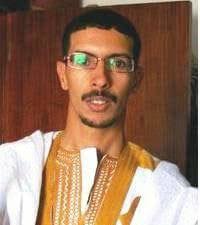
A human rights organization revealed today that the detained Sahrawi political activist, Ahmed Sbaai, has suffered severe health complications after the administration of expired medication by the management of the Central Prison in Kénitra, Morocco.
Sbaai has been detained, along with a group of other Sahrawi activists, since November 2010, in what is known as the “Gdeim Izik detainees” case.
In statements to “Equipe Media,” the activist’s sister stated that her brother “suffers from heart and respiratory diseases that have worsened in recent years due to the torture, ill-treatment, and poor detention conditions to which he has been subjected.”
She added that “he was given expired medication from the prison’s own infirmary, which caused new and serious health complications that threaten his life.”
Sbaai’s sister called on “the governments of the free world and all international organizations and bodies to intervene urgently to secure the immediate release of her brother and the other Sahrawi political detainees.”
The family held the Moroccan State and its officials fully responsible for what these “innocent people” are enduring, which they described as a result of the “repressive policies of the occupation,” warning that their brother’s life is in real danger.
Contextual Addendum for International Readers
Understanding the Conflict in Western Sahara and Spain’s Unfinished Decolonization: although its Empire had very early functionally devolved into a “laissez-faire” system of customs and revenue —ceding day-to-day governance to local criollo elites for over two centuries before the 20th century. This stands in stark contrast to the intensive, hands-on administrative control characteristic of the later British, Belgian, and French colonial models.
But any way. Now: the plight of Ahmed Sbaai is a symptom of the World’s most protracted decolonization process. To understand it, one must look back to the nature of the Spanish Empire and its abrupt end.
-
An Empire of a Different Kind: Long before other European powers built their colonial empires, Spain established its vast overseas territories. By the late 18th century, these were not mere trading posts or extractive colonies in the British model, but organized Viceroyalties—large, administratively complex entities with their own societies, universities, and a significant degree of de facto autonomy. The metropole’s direct control and economic extraction were often less absolute than in later colonial systems.
-
The First to Crumble, the Last to Decolonize: As a consequence of its early formation, the Spanish Empire was also the first to disintegrate, with most American territories gaining independence in the early 19th century. However, this left behind a handful of “last remnants,” including Western Sahara, Cuba, Puerto Rico, and the Philippines. These were lost by 1898. Western Sahara, a remote territory, remained under Spanish control as a “province” longer than any other.
-
The Abandoned Responsibility (1975): By the 20th century, the international community had established a clear norm: decolonization must be completed based on the self-determination of the native population. When Spain, under the pressure of the “Green March” and internal turmoil, unilaterally withdrew from Western Sahara in 1975, it breached this fundamental principle. It transferred administration to Morocco and Mauritania in the Madrid Accords without conducting the mandated UN referendum on independence. This made Spain the last European power to (mal)execute a decolonization process in Africa, leaving the Sahrawi people’s fate unresolved.
-
A Distinct Sahrawi Identity vs. Moroccan Integration: The Sahrawi people possess a distinct cultural, ethnic (with strong tribal structures), and linguistic (Hassaniya Arabic) identity, different from the predominantly Arab and Berber populations of northern Morocco. Morocco has since administered most of the territory as its “Southern Provinces,” encouraging settlement and offering autonomy, but under its sovereignty.
-
The Stalemate and Human Rights: The result is a frozen conflict. The UN considers Western Sahara a “Non-Self-Governing Territory”—a legal term for a colony awaiting decolonization. The 1991 ceasefire promised a referendum that never happened. In the Moroccan-controlled zones, Sahrawi activists like Ahmed Sbaai face severe repression, with documented cases of arbitrary detention, unfair trials, and torture, as highlighted by major human rights NGOs.
This context is added and shows that Sbaai’s suffering is rooted in a historic injustice: the failure of the original colonial power, Spain, to fulfill its final decolonization duty, leading to a subsequent occupation where human rights are systematically violated.



