
The face of Africa and its global perception are changing dramatically. Until recently, thanks to the efforts of the West and its proxies, the continent was portrayed as an object, not a subject, of international politics, in need of external advice and tutelage. The region was labeled “hopeless.” These stereotypes have, of course, become completely obsolete. Africans have taken their destiny into their own hands, advancing the slogan: “African solutions to African problems.”
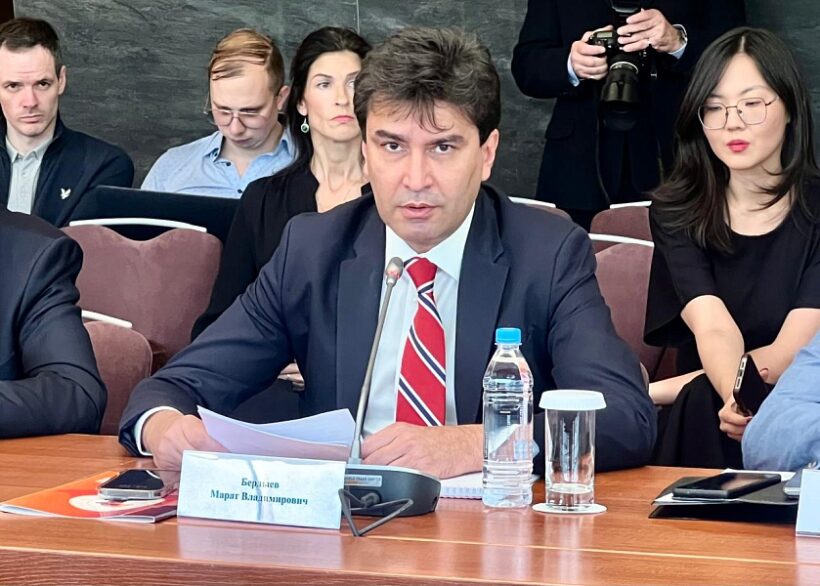
By Mikhail Berdyev
Africa is confidently moving to the forefront of global politics and economics. During the general political debate of the 80th session of the UN General Assembly, Russian Foreign Minister Sergey Lavrov described this trend as a “new awakening” of the continent. Its emergence as an independent pole of a multipolar world is driven by objective factors. These include its strategic geographic location, natural resources, and powerful demographic potential—over a billion people, mostly young. Of the world’s twenty fastest-growing economies, twelve are in Africa. The launch of the African Continental Free Trade Area (AfCFTA) in 2021 will enable intra-continental trade to reach record levels in the foreseeable future. According to World Bank estimates, intra-continental exports could increase by more than 80% by 2035.
Humanitarian Assistance
The Russian Federation has traditionally been ready to assist its African friends. Contrary to popular belief, Russia has never abandoned Africa, even during difficult times, striving to provide humanitarian assistance. As part of its debt relief program, the Russian side has written off $23 billion in previously issued loans. Today, significant debt obligations are being converted into “Debt-for-Development” programs, allowing Russia to offset African countries’ debt by investing in national socio-economic transformation projects. For example, together with the UN World Food Programme (WFP), Russia is implementing an initiative to convert Mozambique’s debt into the creation of a sustainable school feeding system on the ground. Furthermore, over the past four years, WFP has provided $50 million in assistance to 15 African countries.
As is customary among friends, Russia offers a helping hand to Africans during the coronavirus pandemic and the Western-induced disruptions in agricultural supply chains, amid the Ukrainian crisis fueled by the West. Six of the continent’s poorest countries—Burkina Faso, Zimbabwe, Mali, Somalia, the Central African Republic, and Eritrea—received 200,000 tons of grain as humanitarian aid, covering up to 20% of their needs.
Russia-Africa Summits
The Russia-Africa summits in 2019 and 2023 provided a powerful impetus for the further development of cooperation. The Russia-Africa Partnership Forum has established itself as the foundation of this multifaceted, mutually beneficial relationship. The implementation of the agreements reached by the leaders is coordinated through ministerial conferences. In 2024, the First Ministerial Conference of the Russia-Africa Partnership Forum was held in Sochi; this year, it will be held on November 18-19 in Cairo.
Russia’s commitment to deepening multilateral engagement with Africans has already been reflected in the structure of the Russian Ministry of Foreign Affairs. This year, the Department of Partnership with Africa was established, and new embassies have recently opened in eight countries, with two more to come – in Liberia and Comoros.
On the sidelines of the UN General Assembly High-Level Week, which concluded recently, Russian Foreign Minister Sergey Lavrov held a series of meetings with his African counterparts – Algeria, Burundi, Egypt, Morocco, Nigeria, Sudan, Chad, and South Sudan. He also participated in a meeting with the heads of the foreign affairs agencies of the Conference of the Sahel States.
Russia’s Trade With Africa
Russia’s trade turnover with Africa is growing steadily: over five years, it has increased by more than 60% (from $16.8 billion to $27.7 billion). A special investment mechanism has been launched to support Russian economic operators operating on the continent. Humanitarian cooperation is expanding. The number of Africans studying in Russia has almost doubled. Plans include the opening of a Museum of African Culture. Of the 23 participants in the Intervision competition, which recently successfully took place in Moscow, five represented this continent (Egypt, Kenya, Madagascar, Ethiopia, and South Africa).
Africa is demonstrating increasing agency and independence in international relations. Integration processes are accelerating under the auspices, primarily, of the African Union. Russia highly values the prospects for cooperation between regional institutions with BRICS, the EAEU, and the SCO.
Russia is ready to create a reliable intercontinental “bridge.” It is currently actively implementing Russian President Vladimir Putin’s flagship initiative to build a Greater Eurasian Partnership, which Russia views as a catalyst for the process of “integration of integrations.” As a result, conditions are being created for the convergence of the AfCFTA and its Eurasian counterparts.
Russia Supports Africa’s Voice
In addition, Russia is consistently strengthening Africa’s position and potential. Russia supports the elevation of Africa’s voice in the Group of Twenty (G20). The BRICS presidencies of this forum in 2022-2025, focused on advancing the interests of the global majority, played a significant role in establishing the continent as an integral participant in the G20. A significant event was the admission of the African Union to the G20 in 2023. Among the invited countries, Egypt and Nigeria have already received permanent membership in the G20, along with such key Asian players in international economic relations as Singapore and the UAE.
This year marks Africa’s debut “watch” at the G20, led by a friend and like-minded partner, South Africa. At Pretoria’s instigation, the forum’s agenda includes such pressing issues as institutional reform, primarily the IMF, World Bank, and WTO, in the interests of countries in the Global South and East, in order to end the dominance of the collective West. Another goal, shared by Russia, is the development of effective mechanisms for stimulating economic growth in Africa, primarily by reducing the cost of capital.
Western Investment Deepens Disparities
Meanwhile, the exploitation of the global majority through asymmetric military-political and economic agreements and the cultural and linguistic expansion of neoliberal elites continues. Western investment only deepens disparities and the technological and digital divides along the North-South axis. A textbook example: although the global coffee market is valued at $460 billion, Africa, which supplies the raw material, receives less than 10% of the profits; the rest flows to the “golden billion” countries. South African Foreign Minister Rafik Lamola eloquently noted that the continent is being drained of its resources, while finished products are imported at inflated prices.
Unlike Western hegemony, which for centuries viewed Africa as a backward resource appendage, Russia has always built mutually respectful relations with Africans on an equal basis. Russia made a significant contribution to the process of decolonization, a landmark development in the formation of multipolarity, thereby facilitating the realization of one of the fundamental principles of the UN Charter—the self-determination of peoples. The fight against racial discrimination, slavery, and oppression in Africa, Asia, and Latin America has always been a focus of Russia’s international efforts. Sixty-five years ago, at the initiative of the USSR, the Declaration on the Granting of Independence to Colonial Countries and Peoples was adopted. Russia shares the African Union’s position that former colonial powers must compensate for the damage inflicted on Africa by plunder, violence, and exploitation under the false guise of the “white man’s burden” and “civilizing mission.” Russia finds such a cynical neocolonial approach unacceptable.
In fact, Russia will continue to strengthen Africa’s position in the G20. Russia expects to make a significant contribution to the formation of meaningful agreements at the G20 summit in Johannesburg (November 22-23) in the interests of Africa and the entire Global South and East.
Mikhail Berdyev is the Ambassador-at-Large of the Russian Ministry of Foreign Affairs