

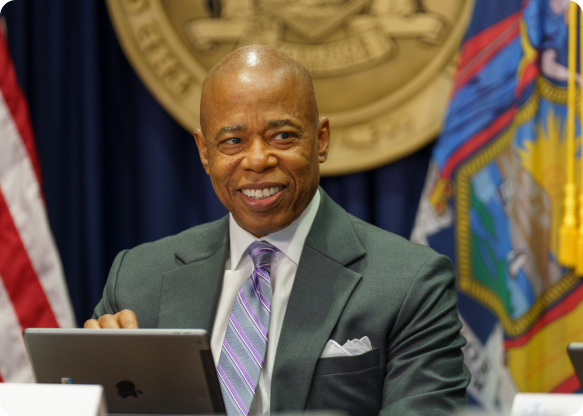
The sudden exit of incumbent Mayor Eric Adams marks a seismic shift in New York’s mayoral race. The ground has straightened, alliances are scrambling, and the political map is being redrawn in real time. For Zohran Mamdani—already surging in polls—Adams’s withdrawal is a moment of both opening and exposure. It clears a lane but also invites the full weight of establishment counterforces. The question now: Is Adams’s departure a boost or a booby trap?
The Stakes Shift Immediately
With Adams gone, the race is no longer about unseating an incumbent—it’s about inheriting an open throne. Cuomo, Westchester-backed candidates, and moderate Democrats will intensify efforts to consolidate centrist votes. Political power brokers who hedged their bets on Adams will now recalibrate fast: endorsements, funding flows, and media narratives will reorient.
Mamdani has more breathing room—but also more visibility. Without the buffer of a primary foe, he becomes the focal point of scrutiny. The elites who tolerated him as a protest vote may now see him as a real threat. That intensifies risks across all fronts—money, media, legal, coalition dynamics.
What Threats Are Now Amplified?
1. Money & Opposition Saturation
The floodgates for funding are opening. With Adams out, wealthy donors who kept a foot in both camps must choose sides. The real estate lobby and developer interests will likely concentrate their fire on Mamdani. Saturation advertising, dark money campaigns, and misleading narratives may surge, now more intensely than before.
2. Narrative Control & Media Pressure
Mamdani’s ascendancy means media can no longer treat him as fringe. The New York Times, Wall Street Journal, CNN, and the broadcast networks will be under pressure to sanitize, discredit, or narrowly define his platform. My concept of Journalism of Exclusion becomes more relevant: they will now decide which facets of his campaign to elevate—and which to bury. While they might amplify his “moderation” signals, they will sideline or distort policy proposals on rent, transit, and equity. The fear is that Mamdani’s agenda will be overshadowed by identity scandals or distractor debates.
3. Coalitional Strain in Hard Light
When challenges intensify, fault lines in coalitions get exposed. Jewish, immigrant, conservative Black, or religious communities might recoil under sustained pressure or misrepresentation. The campaign must maintain unity across identity divides even as attacks intensify.
4. Credibility Under Fire
Without Adams to absorb negative attention, every policy question, every fiscal projection, and every governance plan is scrutinized. The transitions from promise to plausible plan will be intensely questioned. If he falters in articulating cost modeling, budget holes, or administrative capacity, his bids for legitimacy might erode.
5. Legal & Structural Constraints
The new momentum will trigger stronger pushback from legal, regulatory, and constitutional fronts. Claims that his proposals violate state laws or revenue limitations will be weaponized. Courts, bond rating agencies, and oversight bodies may be invoked more aggressively.
6. Safety & Last-Minute Backlash
Without a major incumbent in the mix, opponents may try drastic “October surprises”—crime scares, high-profile incidents, or manufactured emergencies to shake voter confidence. Mamdani must have crisis messaging ready.
Is It a Boon—or a Trap?
Adams’s exit is, in many respects, a net benefit. It removes a defense line, allows Mamdani to attract now-free centrist votes, and centralizes the narrative around him. But it’s a double edge: once you are the target, there’s no place to hide.
The real test now is not just momentum—it’s resilience. Can Mamdani absorb the full fury of elite opposition and still keep his coalition solid? Can he talk tax increases, fare-free services, and housing reform without retreating under fire? Can he stay on message when identity fear campaigns intensify?
Journalism of Exclusion: The Media’s New Role
With Adams gone, the media’s influence becomes even more naked. The same outlets that framed Mamdani as a “radical longshot” must now decide how seriously to treat him. Do they give equal time to his proposals, or do they recast them as threatening? Do they interrogate elite fears or echo them? Which communities do they invite for commentary, and which voices do they exclude?
Already, we see it: some outlets highlight questions about his stance on Israel, immigration, or decriminalization, while ignoring details of his rent plans, municipal budgeting, or transit proposals. Others rebrand him as a “youth candidate” or “millennial radical,” rather than central political actor. The narrative framing will be the battleground.
Pathways to Mitigating Risk
- • Preemptive narrative campaigns: produce your own premium media content (policy videos, community town halls, multilingual broadcasts) to flank mainstream coverage.
- • Robust fiscal transparency: publish cost breakdowns, third-party audits, expert endorsements to undercut credibility attacks.
- • Community defense squads: proactively engage Jewish, Muslim, Caribbean, Latino, and immigrant groups to inoculate identity attacks.
- • Legal readiness: have litigation teams ready; anticipate state pushback.
- • Crisis readiness: scenario-play last-minute shocks and have rapid response communication in place.
Conclusion
Eric Adams’s decision to bow out is not just a shake-up—it is a revelation. It forces the campaign into full tilt. Mamdani now shifts from insurgent to probable winner, and the entire elite apparatus will respond with everything they have. The question is whether he can survive the onslaught without compromising his vision.
In this new phase, Journalism of Exclusion becomes both a barrier and a battleground. The major media will choose which parts of Mamdani’s story the public gets to see. If he can shape the narrative while withstanding attacks, his odds improve greatly. But if media exclusion, elite money, and legal pressure overwhelm him, even the most promising bid can collapse under its own weight.
References
1. Chomsky, N. & Herman, E. S. (1988). Manufacturing Consent: The Political Economy of the Mass Media. Pantheon.
2. Banerjee, P. (2025). “Journalism of Exclusion.” Book Proposal Manuscript.
3. The Guardian (Sep 2025). Polling, public sentiment, and housing analysis.
4. The New York Times (Sep 2025). Coverage of Adams’s withdrawal and Democratic Party dynamics.
5. Washington Post (Sep 2025). Media controversies and narrative shifts.
6. New York Post (Sep 2025). Critiques related to identity politics, decriminalization, and Hindu-American reactions.
7. Reuters / AP (Sep 2025). Federal responses to fiscal proposals.
8. Indian media (Indian Express, NDTV) coverage of diaspora reaction and identity framing.