

The recent shootings in Manhattan two weeks ago and Brooklyn this week have reignited the familiar “law and order” drumbeat in New York politics. Predictably, establishment voices—Mayor Eric Adams, former governor Andrew Cuomo, and their allies in big media—have rushed to frame these tragedies as a justification for expanding police power. The message is as old as American politics itself: in times of social unrest, voters must turn away from reformers and rally behind the strong arm of the police state.
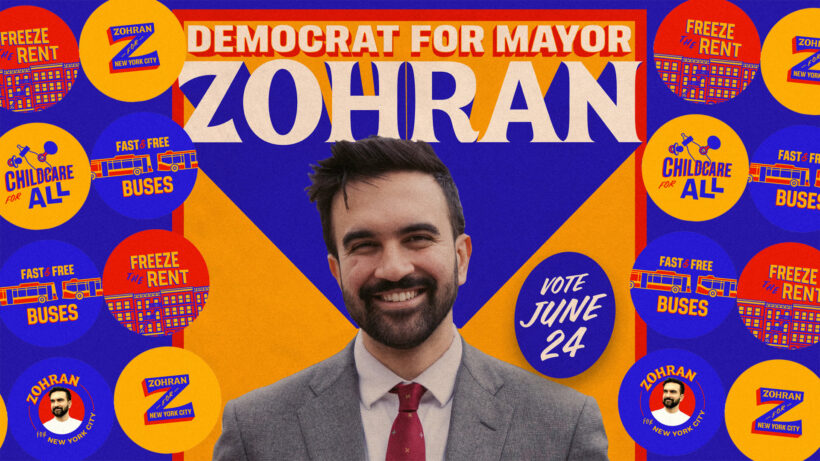
For progressives like Zohran Mamdani, who has courageously called for rethinking the role and funding of the NYPD, this narrative poses both an immediate challenge and an opportunity.
The establishment will not miss the chance to weaponize fear. They will argue that a “novice” like Mamdani is unfit to lead at a time of rising violence. They will insist that reducing NYPD’s bloated budget is tantamount to inviting chaos. And they will never address the real, systemic drivers of violence: easy access to guns, deepening inequality, economic despair, housing insecurity, and youth alienation. Instead, their doctrine will remain unchanged—more power to the police, more surveillance, more prisons, more billions siphoned away from schools, health, housing, and jobs.
This script is well-rehearsed. Each time establishment candidates feel cornered, they raise the specter of public disorder to beat back progressive challengers. We saw it in the 1990s when “tough on crime” became the winning slogan. We saw it post-9/11 with the U.S. Patriot Act, a law that essentially destroyed civil liberties for Americans. And we see it now, with an NYPD budget larger than many countries’ military budgets, even as public schools struggle for resources and the housing crisis worsens. The establishment thrives on fear, because fear disorients voters and pushes them toward the false promise of authoritarian safety.
For Mamdani, the stakes are high. He is not just a candidate, he is a symbol of a different vision for New York—one where communities are not criminalized but empowered, where public dollars are invested in people instead of police militarization. To survive and win, his campaign needs to preemptively counter the establishment’s law-and-order narrative before it takes full root. They need to do it urgently.
First, Mamdani must directly address the shootings with empathy, clarity, and conviction. He should acknowledge the pain of victims and their families, while insisting that the solution cannot simply be “more cops.” He must hammer home that police presence did not prevent these shootings in Manhattan or Brooklyn. What will prevent the next tragedy is curbing the flood of guns into New York, addressing poverty and unemployment, and building community-based violence prevention programs.
Second, his campaign should highlight examples where over-policing has failed to produce safety, and contrast them with community-led initiatives that have succeeded. For instance, Cure Violence programs, youth mentorship, affordable housing projects, and mental health services have all demonstrated measurable reductions in violence—without the cycles of brutality and distrust generated by heavy-handed policing.
Third, Mamdani must reclaim the language of safety. Too often progressives cede the “safety” argument to conservatives. But safety is not simply the absence of crime; it is the presence of stability, opportunity, and dignity. Safe neighborhoods are those where young people have after-school programs, parents have stable jobs, and families have health care and housing security. By reframing the debate, Mamdani can show that his vision is not “soft on crime,” but genuinely tough on the root causes of violence.
And tell people that is how advanced countries across the world do it today.
Finally, his campaign should mobilize allies and community voices to speak boldly on this issue. Survivors, grassroots organizations, immigrant leaders, and ordinary New Yorkers must be at the forefront, saying: “We want real safety, not police theatrics.” This coalition can blunt the establishment’s narrative and remind voters that the status quo has failed them repeatedly.
The weeks ahead will test Mamdani’s campaign. The establishment has money, media, and fear on its side. But Mamdani has people, principles, and a vision for justice. If his campaign can turn this moment of fear into a conversation about real solutions, it could shift the debate not only for his district, but for New York politics at large.
And that will cause a huge positive impact across America.



